数学家传记
哥特弗里德·威廉·莱布尼茨是一位德国数学家,他发展了现今微积分所使用的符号,尽管他从未将导数视为极限。他的哲学思想也很重要,他还发明了一台早期的计算器。
哥特弗里德·威廉·莱布尼茨是Friedrich Leibniz的儿子,Friedrich Leibniz是莱比锡的道德哲学教授。Friedrich Leibniz [3]:-
……显然是一位称职但并非有独创性的学者,他将时间投入到他的职务和家庭中,是一位虔诚的基督徒父亲。
莱布尼茨的母亲是Catharina Schmuck,一位律师的女儿,也是Friedrich Leibniz的第三任妻子。然而,Friedrich Leibniz在莱布尼茨年仅六岁时去世,他由母亲抚养长大。当然,莱布尼茨从她那里学到了道德和宗教价值观,这将在他的生活和哲学中发挥重要作用。
七岁时,莱布尼茨 进入莱比锡的尼古拉学校。虽然他在学校学习拉丁语,但 莱布尼茨 到12岁时已经自学了更高级的拉丁语和一些希腊语。他似乎是因为想读他父亲的书而受到激励。随着他在学校的进步,他学习了 亚里士多德 的逻辑和知识分类理论。莱布尼茨 显然对 亚里士多德 的体系不满意,并开始发展自己关于如何改进它的想法。在晚年,莱布尼茨 回忆说,此时他试图在逻辑真理上找到排序,尽管他当时不知道,但这些是严格数学证明背后的想法。除了学校功课,莱布尼茨 还研究他父亲的书。特别是他阅读了 形而上学 的书籍以及来自天主教和新教作家的神学书籍。
1661年,十四岁的莱布尼茨进入莱比锡大学。今天听起来,这似乎对任何人来说都是真正异常早的入学年龄,但公平地说,按照当时的标准,他相当年轻,但也会有其他类似年龄的人。他学习哲学,这在莱比锡大学教得很好,以及数学,这教得很差。这个两年制普通学位课程中包括的其他主题还有修辞学、拉丁语、希腊语和希伯来语。他于1663年毕业,获得学士学位,学位论文为De Principio Individui Ⓣ(《论个体性原则》),其中:-
……强调个体的存在价值,个体既不能仅用物质也不能仅用形式来解释,而要用他的整个存在来解释。
这里面包含了他“单子”概念的萌芽。莱布尼茨随后前往耶拿,度过1663年的夏季学期。
在耶拿,数学教授是Erhard Weigel,但Weigel也是一位哲学家,通过他,莱布尼茨开始理解数学证明方法对逻辑和哲学等学科的重要性。Weigel相信数是宇宙的基本概念,他的思想对莱布尼茨产生了相当大的影响。到1663年10月,莱布尼茨回到莱比锡,开始攻读法学博士学位。他因一篇学位论文被授予哲学硕士学位,该论文结合了哲学和法律的方面,用他从Weigel那里学到的数学思想研究这些学科中的关系。在莱布尼茨提交学位论文几天后,他的母亲去世了。
在获得法学学士学位后,莱布尼茨致力于他的哲学教授资格论文(Habilitation)。他的工作于1666年出版,书名为Dissertatio de arte combinatoria Ⓣ(论组合艺术)。在这部作品中,莱布尼茨旨在将所有推理和发现归结为数字、字母、声音和颜色等基本元素的组合。
尽管他的声誉日隆且学术得到认可,莱布尼茨在莱比锡被拒绝授予法学博士学位。原因有点不清楚。很可能是因为,作为较年轻的候选人之一,而且只有十二个法学导师职位可用,他会被期望再等一年。然而,也有一个故事说,院长的妻子说服院长反对莱布尼茨,原因不明。莱布尼茨不愿接受任何拖延,他立即前往阿尔特多夫大学,并于1667年2月因他的学位论文De Casibus Perplexis Ⓣ(论疑难案件)获得法学博士学位。
莱布尼茨谢绝了阿尔特多夫的一个讲席承诺,因为他有截然不同的打算。他一度担任纽伦堡炼金术学会的秘书(见[187]),之后结识了男爵Johann Christian von Boineburg。到1667年11月,莱布尼茨住在法兰克福,受雇于Boineburg。在接下来的几年里,莱布尼茨承担了各种不同的项目,涉及科学、文学和政治。他还继续自己的法律事业,在1670年前于美因茨的宫廷居住。他在那里为美因茨选帝侯承担的一项任务,是改进美因茨的罗马民法法典,但[3]:-
莱布尼茨还轮流担任Boineburg的秘书、助手、图书管理员、律师和顾问,同时又是这位男爵及其家人的私人朋友。
Boineburg是天主教徒,而莱布尼茨是路德宗信徒,但莱布尼茨终生的目标之一是实现基督教各教会的重新统一,并且[30]:-
……在Boineburg的鼓励下,他起草了若干关于宗教主题的专论,大多涉及各教会之间有争议的问题……
莱布尼茨的另一个终生目标是把人类全部知识汇集起来。他确实把自己关于罗马民法的工作视为这一计划的一部分,而作为这一计划的另一部分,莱布尼茨试图把各学术学会的工作汇集起来以协调研究。莱布尼茨开始研究运动,尽管他心中想着解释克里斯托弗·雷恩和克里斯蒂安·惠更斯关于弹性碰撞的结果这一问题,他却从抽象的运动观念入手。1671年,他出版了Hypothesis Physica NovaⓉ(《新物理学假说》)。在这部著作中,他像约翰内斯·开普勒一样主张,运动取决于某种精神的作用。他与伦敦皇家学会的秘书Oldenburg通信,并将自己的一些科学著作献给皇家学会和巴黎科学院。莱布尼茨还与巴黎的皇家图书馆员皮埃尔·德·卡克维有联系。正如Ross在[30]中所解释的:-
莱布尼茨的兴趣显然在向科学方向发展,但他仍然向往文学生涯。他一生都以自己的诗歌(大多是拉丁文)为傲,并夸口能背诵维吉尔的《埃涅阿斯纪》的大部分。在与Boineburg相处的这段时间里,他会被视为典型的晚期文艺复兴人文主义者。
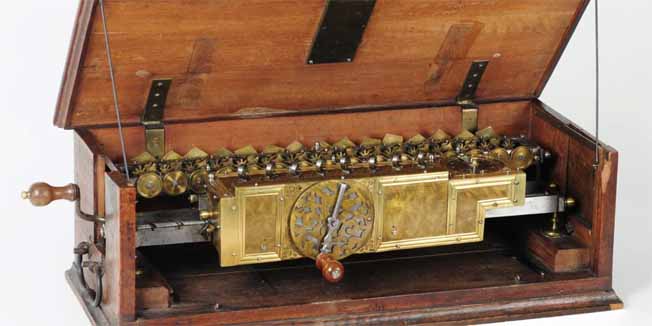
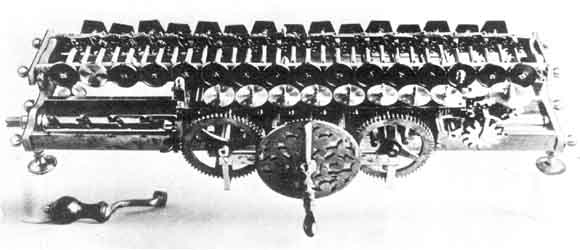
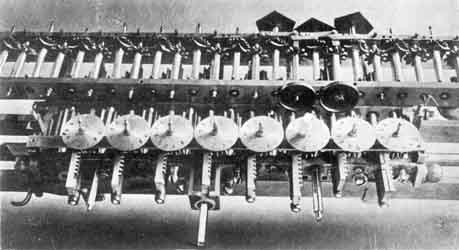
莱布尼茨希望访问巴黎以建立更多科学联系。他已开始建造一台计算机器,希望它能引起兴趣。他制定了一项政治计划,试图说服法国人进攻埃及,这成为他访问巴黎的手段。1672年,莱布尼茨代表Boineburg前往巴黎,试图利用他的计划使路易十四从进攻德意志地区转向。他在巴黎的首要目标是联系法国政府,但在等待这样的机会时,莱布尼茨与那里的数学家和哲学家取得了联系,特别是安托尼·阿尔诺和尼古拉斯‧马勒伯朗士,与安托尼·阿尔诺讨论了各种话题,尤其是教会统一。
莱布尼茨从1672年秋天开始跟随克里斯蒂安·克里斯蒂安·惠更斯学习数学和物理学。在克里斯蒂安·惠更斯的建议下,莱布尼茨阅读了格雷瓜尔·德·圣樊尚关于级数求和的工作,并在这一领域有了一些自己的发现。同样在1672年秋天,博伊内堡的儿子被送到巴黎跟随莱布尼茨学习,这意味着他的经济支持是稳定的。陪同博伊内堡儿子的是博伊内堡的侄子,他肩负外交使命,试图说服路易十四召开和平会议。博伊内堡于12月15日去世,但莱布尼茨继续得到博伊内堡家族的支持。
1673年1月,莱布尼茨和博伊内堡的侄子前往英格兰尝试同样的和平使命,法国的使命已经失败。莱布尼茨参观了皇家学会,并展示了他未完成的计算机。
他的机器的图片在THIS LINK。
他还与罗伯特·胡克、罗伯特·波义耳和约翰·佩尔交谈。在向约翰·佩尔解释他关于级数的结果时,他被告知这些结果可以在加布里埃尔·穆顿的一本书中找到。第二天,他查阅了加布里埃尔·穆顿的书,发现约翰·佩尔是正确的。在2月15日皇家学会的会议上,莱布尼茨没有出席,罗伯特·胡克对莱布尼茨的计算机发表了一些不利的评论。莱布尼茨听说美因茨选帝侯去世后返回巴黎。莱布尼茨意识到他的数学知识比他希望的要少,因此他在这一学科上加倍努力。
Royal Society of London于1673年4月9日选举莱布尼茨为会士。莱布尼茨遇到了雅克·奥扎南并解决了他的一個问题。他还再次见到了克里斯蒂安·惠更斯,后者给了他一份阅读清单,包括布莱兹·帕斯卡、Fabri、詹姆斯·格雷果里、格雷瓜尔·德·圣樊尚、勒内·笛卡儿和Sluze的著作。他开始研究无穷小的几何学,并于1674年写信给皇家学会的奥尔登堡。奥尔登堡回复说艾萨克·牛顿和詹姆斯·格雷果里已经找到了通用方法。然而,莱布尼茨与皇家学会的关系并不太好,因为他没有兑现完成机械计算机的承诺。奥尔登堡也不知道莱布尼茨已经从访问伦敦时那个相当普通的数学家,变成了一个富有创造力的数学天才。1675年8月,埃伦弗里德·瓦尔特·冯·切恩豪斯抵达巴黎,他与莱布尼茨建立了密切的友谊,这对双方的数学研究都大有裨益。
正是在巴黎的这段时期,莱布尼茨发展出了他版本微积分的基本特征。1673年,他仍在努力为他的微积分发展出一套好的记号,而他最初的计算很笨拙。1675年11月21日,他写了一份手稿,首次使用了记号。在同一份手稿中,给出了微分的乘积法则。到1676年秋,莱布尼茨发现了对于积分和分数都熟悉的。
艾萨克·牛顿通过奥尔登堡给莱布尼茨写了一封信,这封信花了一些时间才到达他那里。信中列出了艾萨克·牛顿的许多结果,但没有描述他的方法。莱布尼茨立即回复,但艾萨克·牛顿没有意识到他的信花了很长时间才到达莱布尼茨,以为他有六周时间来准备回复。艾萨克·牛顿的信的后果之一当然是莱布尼茨意识到他必须迅速发表一份关于他自己方法的更完整说明。
艾萨克·牛顿于1676年10月24日给莱布尼茨写了第二封信,这封信直到1677年6月才到达莱布尼茨,那时莱布尼茨已在汉诺威。这第二封信虽然语气礼貌,但显然是艾萨克·牛顿认为莱布尼茨窃取了他的方法而写的。在回复中,莱布尼茨给出了一些关于他微分学原理的细节,包括复合函数的求导法则。
艾萨克·牛顿有理由声称,
……没有一个以前未解决的问题被解决……
通过莱布尼茨的方法,但形式主义在微积分的后期发展中证明至关重要。莱布尼茨从未将导数视为极限。直到让·勒朗·达朗贝尔的工作中才出现这一点。
莱布尼茨本想留在巴黎的科学院,但人们认为那里已经有足够多的外国人,因此没有发出邀请。莱布尼茨不情愿地接受了汉诺威公爵约翰·弗里德里希提供的职位,担任汉诺威的图书管理员和宫廷顾问。他于1676年10月离开巴黎,经伦敦和荷兰前往汉诺威。莱布尼茨余生从1676年12月直到去世,除了多次旅行外,都在汉诺威度过。
他在汉诺威的职责[30]:-
……作为图书馆员是繁重的,但相当平凡:一般行政管理、购买新书和二手藏书,以及常规编目。
然而,他承担了整整一系列其他项目。例如,一个始于1678-79年的大型项目涉及从哈茨山脉的矿井中排水。他的想法是利用风力和水力来操作水泵。他设计了许多不同类型的风车、水泵、齿轮,但[3]:-
……这些项目每一个都以失败告终。莱布尼茨自己认为这是因为管理者和技术人员的故意阻挠,以及工人们担心技术进步会让他们失去工作。
1680年,约翰·弗里德里希公爵去世,他的兄弟恩斯特·奥古斯特成为新公爵。哈茨项目一直很困难,到1684年失败了。然而,莱布尼茨取得了重要的科学成果,成为最早通过他为哈茨项目收集的观察来研究地质学的人之一。在这项工作中,他形成了地球最初是熔融的假说。
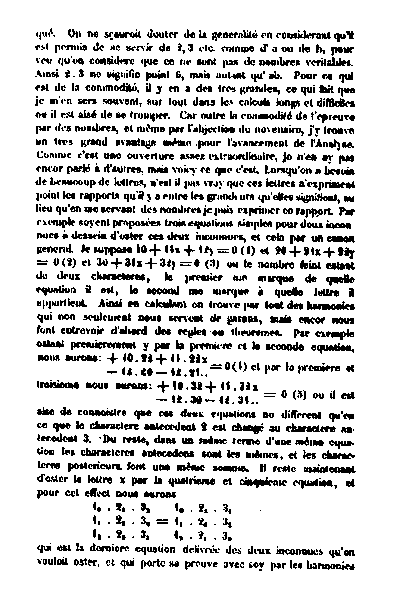
莱布尼茨在数学上的另一项伟大成就是发展了二进制算术系统。他在1679年之前完善了这一系统,但直到1701年才发表任何东西,当时他将论文Essay d'une nouvelle science des nombres寄给巴黎科学院,以纪念他当选为科学院院士。莱布尼茨的另一项主要数学工作是关于行列式的工作,这源于他发展求解线性方程组的方法。尽管他一生中从未发表这项工作,但他发展了许多不同的方法来处理这一主题,并尝试了许多不同的符号,以找出最有用的那一种。一篇日期为1684年1月22日的未发表论文包含了非常令人满意的符号和结果。
莱布尼茨在1680年代继续完善他的形而上学体系,试图将推理归结为一种思想的代数。莱布尼茨发表了Meditationes de Cognitione, Veritate et IdeisⓉ(关于知识、真理和观念的反思),阐明了他的知识理论。1686年2月,莱布尼茨写了他的Discours de métaphysiqueⓉ(关于形而上学的论述)。
莱布尼茨承担的另一个重大项目,这次是为恩斯特·奥古斯特公爵,是撰写圭尔夫家族的历史,不伦瑞克家族是其中的一部分。他进行了一次长途旅行,寻找档案材料作为这部历史的基础,在1687年11月至1690年6月期间访问了巴伐利亚、奥地利和意大利。像往常一样,莱布尼茨在这些旅程中抓住机会会见了许多不同学科的学者。例如,在佛罗伦萨,他与温琴佐·维维亚尼讨论了数学,后者曾是伽利略的最后一个学生。尽管莱布尼茨出版了九大卷关于圭尔夫家族历史的档案材料,但他从未写出被委托的作品。
1684年,莱布尼茨在Nova Methodus pro Maximis et Minimis, itemque Tangentibus...Ⓣ(求最大值、最小值和切线的新方法...)中发表了他的微分学细节,该文发表在Acta Eruditorum上,这是一本两年前在莱比锡创办的期刊。这篇论文包含了熟悉的d符号,计算幂、乘积和商的导数的规则。然而,它没有包含证明,雅各布·伯努利称其为谜而不是解释。
1686年,莱布尼茨在Acta Eruditorum上发表了一篇讨论积分学的论文,其中首次印刷出现了∫记号。
艾萨克·牛顿的Principia在次年出现。艾萨克·牛顿的“流数法”写于1671年,但艾萨克·牛顿未能将其出版,直到1736年约翰·科尔森制作了英文翻译才印刷出现。艾萨克·牛顿著作出版的这种延迟导致了与莱布尼茨的争议。
莱布尼茨进行的另一项重要数学工作是他对动力学的研究。他批评了勒内·笛卡儿的力学思想,并考察了实际上就是动能、势能和动量的东西。这项工作始于1676年,但他在不同时期重新回到它,特别是在1689年在罗马时。很明显,当他在罗马时,除了在梵蒂冈图书馆工作外,莱布尼茨还与科学院成员合作。此时他被选为科学院成员。同样在罗马时,他阅读了艾萨克·牛顿的Principia。他的两部分论文Dynamica研究了抽象动力学和具体动力学,写作风格与艾萨克·牛顿的Principia有些相似。罗斯在[30]中写道:-
……尽管莱布尼茨在追求真正的动力学方面超越了他的时代,但正是这种雄心壮志使他未能与他的对手艾萨克·牛顿的成就相匹敌。……只有通过简化问题……艾萨克·牛顿才成功地将它们缩减到可处理的程度。
莱布尼茨投入了大量精力来推动科学学会。他参与了在柏林、德累斯顿、维也纳和圣彼得堡建立科学院的行动。1695年,他开始为在柏林建立科学院而奔走,1698年他访问柏林作为其努力的一部分,并在1700年的另一次访问中最终说服弗里德里希于7月11日创立了勃兰登堡科学学会。莱布尼茨被任命为其第一任院长,这是终身任命。然而,该科学院并不特别成功,只出版了一卷会议记录。它确实导致了几年后柏林科学院的创建。
莱布尼茨创建科学院的其他尝试则不那么成功。他于1712年被任命为拟议中的维也纳科学院的院长,但莱布尼茨在该科学院创建之前就去世了。同样,他为推动圣彼得堡科学院的建立做了大量工作,但同样,直到他去世后它才成立。
毫不夸张地说,莱布尼茨与欧洲大多数学者都有通信往来。他有超过600位通信者。与他通信的数学家中包括格兰迪。通信始于1703年,后来涉及将代入所得到的结果。莱布尼茨也就这个悖论与皮埃尔·伐里农通信。莱布尼茨与约翰·伯努利讨论了负数的对数,见[155]。
1710年,莱布尼茨出版了ThéodicéeⓉ(《神义论》),这是一部哲学著作,旨在处理一个由善良上帝创造的世界中的恶的问题。莱布尼茨声称宇宙必须是不完美的,否则它就不会与上帝有区别。他接着声称宇宙是不完美中最好的。莱布尼茨意识到这个论证看起来不太可能——一个没有人被洪水淹死的宇宙肯定比现在的宇宙更好,但仍然不完美。他在这里的论点是,例如消除自然灾害将涉及对科学定律的如此改变,以至于世界会变得更糟。1714年,莱布尼茨写了MonadologiaⓉ(《单子论》),它综合了他早期著作ThéodicéeⓉ(《神义论》)的哲学。
莱布尼茨晚年的大部分数学活动都涉及关于微积分发明的优先权之争。1711年,他读了Keill在Transactions of the Royal Society of London上的论文,该论文指控莱布尼茨剽窃。莱布尼茨要求撤回该指控,声称他在读到约翰·沃利斯的著作之前从未听说过流数微积分。Keill回复莱布尼茨说,通过奥尔登堡寄来的艾萨克·牛顿的两封信给出了:-
……相当清楚的迹象……莱布尼茨从中推导出了该微积分的原理,或者至少本可以推导出这些原理。
莱布尼茨再次写信给皇家学会,要求他们纠正Keill的主张对他造成的错误。针对这封信,Royal Society成立了一个委员会来对优先权之争作出裁决。该委员会完全偏袒一方,没有要求莱布尼茨陈述他对事件的版本。委员会的报告中支持艾萨克·牛顿,由艾萨克·牛顿本人撰写,并于1713年初作为Commercium epistolicum出版,但莱布尼茨直到1714年秋才看到。他在1713年从约翰·伯努利的一封信中得知了其内容,该信报告了他的侄子尼古拉·伯努利一世从巴黎带来的该著作的副本。莱布尼茨出版了一本匿名小册子Charta volans,阐述了他的立场,其中艾萨克·牛顿在理解二阶及更高阶导数时的一个错误,被约翰·伯努利发现,被用作支持莱布尼茨论点的证据。
争论继续,Keill出版了对Charta volans的回复。莱布尼茨拒绝与Keill继续争论,说他无法回复一个白痴。然而,当艾萨克·牛顿直接写信给他时,莱布尼茨确实回复了,并详细描述了他发现微分学的过程。从1715年直到去世,莱布尼茨与皮埃尔·萨米埃尔萨缪尔·克拉克通信,后者是艾萨克·牛顿的支持者,通信内容涉及时间、空间、自由意志、跨越虚空的引力吸引以及其他主题,见[4]、[62]、[108]和[201]。
在[2]中,莱布尼茨被描述如下:-
莱布尼茨中等身材,有些驼背,宽肩膀但双腿向外弯曲,既能连续几天坐在同一把椅子上思考,也能在冬夏遍历欧洲的道路。他不知疲倦地工作,是一位普世的写信者(他有600多位通信者),一位爱国者和世界主义者,一位伟大的科学家,也是西方文明最强大的精神之一。
Ross在[30]中指出,莱布尼茨的遗产可能并非他所希望的那样:-
具有讽刺意味的是,一个如此致力于相互理解事业的人,却只成功地助长了知识上的沙文主义和教条主义。同样具有讽刺意味的是,他是最后几位伟大的博学者之一——不是指拥有广泛常识的肤浅意义,而是指作为整个知识探究世界的公民这一更深层的意义。他刻意忽视学科之间的界限,资格的缺乏从未阻止他为既定的专业领域贡献新的见解。事实上,他对大学作为机构如此敌视的原因之一,是因为它们的院系结构阻止了他视为知识和智慧进步所必需的观念交叉融合。讽刺的是,他本人却促成了一个知识和科学专业化程度远高于以往的时代,因为技术进步使越来越多的学科超出了聪明的外行和业余爱好者的理解范围。
莱布尼茨在汉诺威去世,他唯一的哀悼者是他的秘书,一位目击者写道:
他的葬礼更像是一个强盗,而非他真正的身份——他那个时代的装饰。
Gottfried Leibniz was the son of Friedrich Leibniz, a professor of moral philosophy at Leipzig. Friedrich Leibniz [3]:-
...was evidently a competent though not original scholar, who devoted his time to his offices and to his family as a pious, Christian father.
Leibniz's mother was Catharina Schmuck, the daughter of a lawyer and Friedrich Leibniz's third wife. However, Friedrich Leibniz died when Leibniz was only six years old and he was brought up by his mother. Certainly Leibniz learnt his moral and religious values from her which would play an important role in his life and philosophy.
At the age of seven, Leibniz entered the Nicolai School in Leipzig. Although he was taught Latin at school, Leibniz had taught himself far more advanced Latin and some Greek by the age of 12. He seems to have been motivated by wanting to read his father's books. As he progressed through school he was taught Aristotle's logic and theory of categorising knowledge. Leibniz was clearly not satisfied with Aristotle's system and began to develop his own ideas on how to improve on it. In later life Leibniz recalled that at this time he was trying to find orderings on logical truths which, although he did not know it at the time, were the ideas behind rigorous mathematical proofs. As well as his school work, Leibniz studied his father's books. In particular he read metaphysics books and theology books from both Catholic and Protestant writers.
In 1661, at the age of fourteen, Leibniz entered the University of Leipzig. It may sound today as if this were a truly exceptionally early age for anyone to enter university, but it is fair to say that by the standards of the time he was quite young but there would be others of a similar age. He studied philosophy, which was well taught at the University of Leipzig, and mathematics which was very poorly taught. Among the other topics which were included in this two year general degree course were rhetoric, Latin, Greek and Hebrew. He graduated with a bachelors degree in 1663 with a thesis De Principio Individui Ⓣ which:-
... emphasised the existential value of the individual, who is not to be explained either by matter alone or by form alone but rather by his whole being.
In this there is the beginning of his notion of "monad". Leibniz then went to Jena to spend the summer term of 1663.
At Jena the professor of mathematics was Erhard Weigel but Weigel was also a philosopher and through him Leibniz began to understand the importance of the method of mathematical proof for subjects such as logic and philosophy. Weigel believed that number was the fundamental concept of the universe and his ideas were to have considerable influence of Leibniz. By October 1663 Leibniz was back in Leipzig starting his studies towards a doctorate in law. He was awarded his Master's Degree in philosophy for a dissertation which combined aspects of philosophy and law studying relations in these subjects with mathematical ideas that he had learnt from Weigel. A few days after Leibniz presented his dissertation, his mother died.
After being awarded a bachelor's degree in law, Leibniz worked on his habilitation in philosophy. His work was to be published in 1666 as Dissertatio de arte combinatoria Ⓣ . In this work Leibniz aimed to reduce all reasoning and discovery to a combination of basic elements such as numbers, letters, sounds and colours.
Despite his growing reputation and acknowledged scholarship, Leibniz was refused the doctorate in law at Leipzig. It is a little unclear why this happened. It is likely that, as one of the younger candidates and there only being twelve law tutorships available, he would be expected to wait another year. However, there is also a story that the Dean's wife persuaded the Dean to argue against Leibniz, for some unexplained reason. Leibniz was not prepared to accept any delay and he went immediately to the University of Altdorf where he received a doctorate in law in February 1667 for his dissertation De Casibus Perplexis Ⓣ.
Leibniz declined the promise of a chair at Altdorf because he had very different things in view. He served as secretary to the Nuremberg alchemical society for a while (see [187]) then he met Baron Johann Christian von Boineburg. By November 1667 Leibniz was living in Frankfurt, employed by Boineburg. During the next few years Leibniz undertook a variety of different projects, scientific, literary and political. He also continued his law career taking up residence at the courts of Mainz before 1670. One of his tasks there, undertaken for the Elector of Mainz, was to improve the Roman civil law code for Mainz but [3]:-
Leibniz was also occupied by turns as Boineburg's secretary, assistant, librarian, lawyer and advisor, while at the same time a personal friend of the Baron and his family.
Boineburg was a Catholic while Leibniz was a Lutheran but Leibniz had as one of his lifelong aims the reunification of the Christian Churches and [30]:-
... with Boineburg's encouragement, he drafted a number of monographs on religious topics, mostly to do with points at issue between the churches...
Another of Leibniz's lifelong aims was to collate all human knowledge. Certainly he saw his work on Roman civil law as part of this scheme and as another part of this scheme, Leibniz tried to bring the work of the learned societies together to coordinate research. Leibniz began to study motion, and although he had in mind the problem of explaining the results of Wren and Huygens on elastic collisions, he began with abstract ideas of motion. In 1671 he published Hypothesis Physica Nova Ⓣ. In this work he claimed, as had Kepler, that movement depends on the action of a spirit. He communicated with Oldenburg, the secretary of the Royal Society of London, and dedicated some of his scientific works to the Royal Society and the Paris Academy. Leibniz was also in contact with Carcavi, the Royal Librarian in Paris. As Ross explains in [30]:-
Although Leibniz's interests were clearly developing in a scientific direction, he still hankered after a literary career. All his life he prided himself on his poetry (mostly Latin), and boasted that he could recite the bulk of Virgil's "Aeneid" by heart. During this time with Boineburg he would have passed for a typical late Renaissance humanist.
Leibniz wished to visit Paris to make more scientific contacts. He had begun construction of a calculating machine which he hoped would be of interest. He formed a political plan to try to persuade the French to attack Egypt and this proved the means of his visiting Paris. In 1672 Leibniz went to Paris on behalf of Boineburg to try to use his plan to divert Louis XIV from attacking German areas. His first object in Paris was to make contact with the French government but, while waiting for such an opportunity, Leibniz made contact with mathematicians and philosophers there, in particular Arnauld and Malebranche, discussing with Arnauld a variety of topics but particularly church reunification.
In Paris Leibniz studied mathematics and physics under Christiaan Huygens beginning in the autumn of 1672. On Huygens' advice, Leibniz read Saint-Vincent's work on summing series and made some discoveries of his own in this area. Also in the autumn of 1672, Boineburg's son was sent to Paris to study under Leibniz which meant that his financial support was secure. Accompanying Boineburg's son was Boineburg's nephew on a diplomatic mission to try to persuade Louis XIV to set up a peace congress. Boineburg died on 15 December but Leibniz continued to be supported by the Boineburg family.
In January 1673 Leibniz and Boineburg's nephew went to England to try the same peace mission, the French one having failed. Leibniz visited the Royal Society, and demonstrated his incomplete calculating machine.
A picture of his machine is at THIS LINK.
He also talked with Hooke, Boyle and Pell. While explaining his results on series to Pell, he was told that these were to be found in a book by Mouton. The next day he consulted Mouton's book and found that Pell was correct. At the meeting of the Royal Society on 15 February, which Leibniz did not attend, Hooke made some unfavourable comments on Leibniz's calculating machine. Leibniz returned to Paris on hearing that the Elector of Mainz had died. Leibniz realised that his knowledge of mathematics was less than he would have liked so he redoubled his efforts on the subject.
The Royal Society of London elected Leibniz a fellow on 9 April 1673. Leibniz met Ozanam and solved one of his problems. He also met again with Huygens who gave him a reading list including works by Pascal, Fabri, Gregory, Saint-Vincent, Descartes and Sluze. He began to study the geometry of infinitesimals and wrote to Oldenburg at the Royal Society in 1674. Oldenburg replied that Newton and Gregory had found general methods. Leibniz was, however, not in the best of favours with the Royal Society since he had not kept his promise of finishing his mechanical calculating machine. Nor was Oldenburg to know that Leibniz had changed from the rather ordinary mathematician who visited London, into a creative mathematical genius. In August 1675 Tschirnhaus arrived in Paris and he formed a close friendship with Leibniz which proved very mathematically profitable to both.
It was during this period in Paris that Leibniz developed the basic features of his version of the calculus. In 1673 he was still struggling to develop a good notation for his calculus and his first calculations were clumsy. On 21 November 1675 he wrote a manuscript using the notation for the first time. In the same manuscript the product rule for differentiation is given. By autumn 1676 Leibniz discovered the familiar for both integral and fractional .
Newton wrote a letter to Leibniz, through Oldenburg, which took some time to reach him. The letter listed many of Newton's results but it did not describe his methods. Leibniz replied immediately but Newton, not realising that his letter had taken a long time to reach Leibniz, thought he had had six weeks to work on his reply. Certainly one of the consequences of Newton's letter was that Leibniz realised he must quickly publish a fuller account of his own methods.
Newton wrote a second letter to Leibniz on 24 October 1676 which did not reach Leibniz until June 1677 by which time Leibniz was in Hanover. This second letter, although polite in tone, was clearly written by Newton believing that Leibniz had stolen his methods. In his reply Leibniz gave some details of the principles of his differential calculus including the rule for differentiating a function of a function.
Newton was to claim, with justification, that
... not a single previously unsolved problem was solved ...
by Leibniz's approach but the formalism was to prove vital in the latter development of the calculus. Leibniz never thought of the derivative as a limit. This does not appear until the work of d'Alembert.
Leibniz would have liked to have remained in Paris in the Academy of Sciences, but it was considered that there were already enough foreigners there and so no invitation came. Reluctantly Leibniz accepted a position from the Duke of Hanover, Johann Friedrich, of librarian and of Court Councillor at Hanover. He left Paris in October 1676 making the journey to Hanover via London and Holland. The rest of Leibniz's life, from December 1676 until his death, was spent at Hanover except for the many travels that he made.
His duties at Hanover [30]:-
... as librarian were onerous, but fairly mundane: general administration, purchase of new books and second-hand libraries, and conventional cataloguing.
He undertook a whole collection of other projects however. For example one major project begun in 1678-79 involved draining water from the mines in the Harz mountains. His idea was to use wind power and water power to operate pumps. He designed many different types of windmills, pumps, gears but [3]:-
... every one of these projects ended in failure. Leibniz himself believed that this was because of deliberate obstruction by administrators and technicians, and the workers' fear that technological progress would cost them their jobs.
In 1680 Duke Johann Friedrich died and his brother Ernst August became the new Duke. The Harz project had always been difficult and it failed by 1684. However Leibniz had achieved important scientific results becoming one of the first people to study geology through the observations he compiled for the Harz project. During this work he formed the hypothesis that the Earth was at first molten.
Another of Leibniz's great achievements in mathematics was his development of the binary system of arithmetic. He perfected his system by 1679 but he did not publish anything until 1701 when he sent the paper Essay d'une nouvelle science des nombres to the Paris Academy to mark his election to the Academy. Another major mathematical work by Leibniz was his work on determinants which arose from his developing methods to solve systems of linear equations. Although he never published this work in his lifetime, he developed many different approaches to the topic with many different notations being tried out to find the one which was most useful. An unpublished paper dated 22 January 1684 contains very satisfactory notation and results.
Leibniz continued to perfect his metaphysical system in the 1680s attempting to reduce reasoning to an algebra of thought. Leibniz published Meditationes de Cognitione, Veritate et Ideis Ⓣ which clarified his theory of knowledge. In February 1686, Leibniz wrote his Discours de métaphysique Ⓣ.
Another major project which Leibniz undertook, this time for Duke Ernst August, was writing the history of the Guelf family, of which the House of Brunswick was a part. He made a lengthy trip to search archives for material on which to base this history, visiting Bavaria, Austria and Italy between November 1687 and June 1690. As always Leibniz took the opportunity to meet with scholars of many different subjects on these journeys. In Florence, for example, he discussed mathematics with Viviani who had been Galileo's last pupil. Although Leibniz published nine large volumes of archival material on the history of the Guelf family, he never wrote the work that was commissioned.
In 1684 Leibniz published details of his differential calculus in Nova Methodus pro Maximis et Minimis, itemque Tangentibus... Ⓣ in Acta Eruditorum, a journal established in Leipzig two years earlier. The paper contained the familiar d notation, the rules for computing the derivatives of powers, products and quotients. However it contained no proofs and Jacob Bernoulli called it an enigma rather than an explanation.
In 1686 Leibniz published, in Acta Eruditorum, a paper dealing with the integral calculus with the first appearance in print of the ∫ notation.
Newton's Principia appeared the following year. Newton's 'method of fluxions' was written in 1671 but Newton failed to get it published and it did not appear in print until John Colson produced an English translation in 1736. This time delay in the publication of Newton's work resulted in a dispute with Leibniz.
Another important piece of mathematical work undertaken by Leibniz was his work on dynamics. He criticised Descartes' ideas of mechanics and examined what are effectively kinetic energy, potential energy and momentum. This work was begun in 1676 but he returned to it at various times, in particular while he was in Rome in 1689. It is clear that while he was in Rome, in addition to working in the Vatican library, Leibniz worked with members of the Accademia. He was elected a member of the Accademia at this time. Also while in Rome he read Newton's Principia. His two part treatise Dynamica studied abstract dynamics and concrete dynamics and is written in a somewhat similar style to Newton's Principia. Ross writes in [30]:-
... although Leibniz was ahead of his time in aiming at a genuine dynamics, it was this very ambition that prevented him from matching the achievement of his rival Newton. ... It was only by simplifying the issues... that Newton succeeded in reducing them to manageable proportions.
Leibniz put much energy into promoting scientific societies. He was involved in moves to set up academies in Berlin, Dresden, Vienna, and St Petersburg. He began a campaign for an academy in Berlin in 1695, he visited Berlin in 1698 as part of his efforts and on another visit in 1700 he finally persuaded Friedrich to found the Brandenburg Society of Sciences on 11 July. Leibniz was appointed its first president, this being an appointment for life. However, the Academy was not particularly successful and only one volume of the proceedings were ever published. It did lead to the creation of the Berlin Academy some years later.
Other attempts by Leibniz to found academies were less successful. He was appointed as Director of a proposed Vienna Academy in 1712 but Leibniz died before the Academy was created. Similarly he did much of the work to prompt the setting up of the St Petersburg Academy, but again it did not come into existence until after his death.
It is no exaggeration to say that Leibniz corresponded with most of the scholars in Europe. He had over 600 correspondents. Among the mathematicians with whom he corresponded was Grandi. The correspondence started in 1703, and later concerned the results obtained by putting into . Leibniz also corresponded with Varignon on this paradox. Leibniz discussed logarithms of negative numbers with Johann Bernoulli, see [155].
In 1710 Leibniz published Théodicée Ⓣ a philosophical work intended to tackle the problem of evil in a world created by a good God. Leibniz claims that the universe had to be imperfect, otherwise it would not be distinct from God. He then claims that the universe is the best possible without being perfect. Leibniz is aware that this argument looks unlikely - surely a universe in which nobody is killed by floods is better than the present one, but still not perfect. His argument here is that the elimination of natural disasters, for example, would involve such changes to the laws of science that the world would be worse. In 1714 Leibniz wrote Monadologia Ⓣ which synthesised the philosophy of his earlier work, the Théodicée Ⓣ.
Much of the mathematical activity of Leibniz's last years involved the priority dispute over the invention of the calculus. In 1711 he read the paper by Keill in the Transactions of the Royal Society of London which accused Leibniz of plagiarism. Leibniz demanded a retraction saying that he had never heard of the calculus of fluxions until he had read the works of Wallis. Keill replied to Leibniz saying that the two letters from Newton, sent through Oldenburg, had given:-
... pretty plain indications... whence Leibniz derived the principles of that calculus or at least could have derived them.
Leibniz wrote again to the Royal Society asking them to correct the wrong done to him by Keill's claims. In response to this letter the Royal Society set up a committee to pronounce on the priority dispute. It was totally biased, not asking Leibniz to give his version of the events. The report of the committee, finding in favour of Newton, was written by Newton himself and published as Commercium epistolicum near the beginning of 1713 but not seen by Leibniz until the autumn of 1714. He learnt of its contents in 1713 in a letter from Johann Bernoulli, reporting on the copy of the work brought from Paris by his nephew Nicolaus(I) Bernoulli. Leibniz published an anonymous pamphlet Charta volans setting out his side in which a mistake by Newton in his understanding of second and higher derivatives, spotted by Johann Bernoulli, is used as evidence of Leibniz's case.
The argument continued with Keill who published a reply to Charta volans. Leibniz refused to carry on the argument with Keill, saying that he could not reply to an idiot. However, when Newton wrote to him directly, Leibniz did reply and gave a detailed description of his discovery of the differential calculus. From 1715 up until his death Leibniz corresponded with Samuel Clarke, a supporter of Newton, on time, space, freewill, gravitational attraction across a void and other topics, see [4], [62], [108] and [201].
In [2] Leibniz is described as follows:-
Leibniz was a man of medium height with a stoop, broad-shouldered but bandy-legged, as capable of thinking for several days sitting in the same chair as of travelling the roads of Europe summer and winter. He was an indefatigable worker, a universal letter writer (he had more than 600 correspondents), a patriot and cosmopolitan, a great scientist, and one of the most powerful spirits of Western civilisation.
Ross, in [30], points out that Leibniz's legacy may have not been quite what he had hoped for:-
It is ironical that one so devoted to the cause of mutual understanding should have succeeded only in adding to intellectual chauvinism and dogmatism. There is a similar irony in the fact that he was one of the last great polymaths - not in the frivolous sense of having a wide general knowledge, but in the deeper sense of one who is a citizen of the whole world of intellectual inquiry. He deliberately ignored boundaries between disciplines, and lack of qualifications never deterred him from contributing fresh insights to established specialisms. Indeed, one of the reasons why he was so hostile to universities as institutions was because their faculty structure prevented the cross-fertilisation of ideas which he saw as essential to the advance of knowledge and of wisdom. The irony is that he was himself instrumental in bringing about an era of far greater intellectual and scientific specialism, as technical advances pushed more and more disciplines out of the reach of the intelligent layman and amateur.
When Leibniz died in Hannover, his only mourner was his secretary, and an eyewitness wrote:
He was buried more like a robber than what he really was, the ornament of his century.
正文里的方括号编号指向这里,悬停即可直接看到条目。书目保留原文——译了书名反而查不到文献。
原站列出的延伸阅读与外部数据库,照原样保留,目标多为英文页面。
关于哥特弗里德·威廉·莱布尼茨的其它页面:
关于哥特弗里德·威廉·莱布尼茨的其它网站:
原站的交叉引用。指向本站已镜像专题的留在站内,其余仍指回原站。