数学家传记
埃瓦里斯特·伽罗瓦是一位法国数学家,他提出了一种判断一般方程何时可用根式求解的方法,并以其早期群论的发展而闻名。他在一场决斗后英年早逝。
埃瓦里斯特·伽罗瓦的父亲Nicholas Gabriel Galois和母亲Adelaide Marie Demante都聪慧过人,在哲学、古典文学和宗教方面受过良好教育。然而,在伽罗瓦的家族中没有任何数学才能的迹象。他的母亲是伽罗瓦12岁前唯一的老师。她教他希腊语、拉丁语和宗教,并将自己的怀疑精神传给了儿子。伽罗瓦的父亲是社区中的重要人物,1815年当选为Bourg-la-Reine的市长。
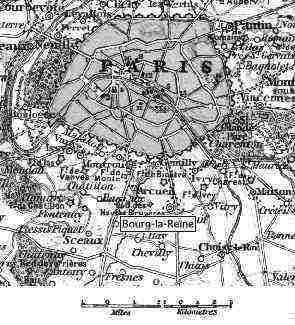
你可以在THIS LINK看到19世纪巴黎的地图,其中显示了皇后堡。
对伽罗瓦一生将起重大作用的历史事件的起点,无疑是1789年7月14日攻占巴士底狱。从这时起,路易十六的君主制陷入重大困境,因为大多数法国人弥合了分歧,团结起来试图摧毁教会和国家的特权体制。
尽管试图妥协,路易十六在试图逃离该国后仍受到审判。国王于1793年1月21日被处决后,随之而来的是恐怖统治,进行了许多政治审判。到1793年底,巴黎关押着4595名政治犯。然而法国开始迎来更好的时期,因为他们的军队在拿破仑·波拿巴的指挥下赢得了一个又一个胜利。
拿破仑于1800年成为第一执政,1804年成为皇帝。法国军队继续征服欧洲,而拿破仑的权力越来越稳固。1811年,拿破仑处于权力的顶峰。到1815年,拿破仑的统治结束了。1812年俄国战役失败后,接连遭遇败绩,盟军于1814年3月31日进入巴黎。拿破仑于4月6日退位,路易十八被盟军立为国王。1815年发生了著名的百日王朝。拿破仑于3月20日进入巴黎,6月18日在滑铁卢战败,6月22日第二次退位。路易十八复位为国王,但于1824年9月去世,查理十世成为新国王。
伽罗瓦此时已上学。他于1823年10月6日作为寄宿生进入路易大帝中学四年级。即使在他的第一个学期,也发生了一次小规模的反抗,40名学生被开除。伽罗瓦没有参与,在1824-25年间,他的学校记录良好,并获得了几个奖项。然而在1826年,伽罗瓦被要求留级,因为他在修辞学方面的功课未达到要求的标准。
1827年2月是伽罗瓦一生的转折点。他注册了第一门数学课,即Hypolyte 皮埃尔·韦尼耶(1800—1875)的课。他很快便沉浸在数学之中,他的学业导师写道
支配他的是对数学的热情,我认为如果他的父母允许他只学这个,那对他最好,他在这里浪费时间,除了折磨老师、让自己被惩罚压垮之外什么也不做。
伽罗瓦的学校报告开始把他描述为singular, bizarre、original和closed。有趣的是,也许是有史以来最具原创性的数学家,竟会被批评为original。然而韦尼耶报告说
智力,进步显著但方法不足。
1828年,伽罗瓦参加了巴黎综合理工学院的考试,但未能通过。那是巴黎的顶尖大学,伽罗瓦想必出于学术原因希望进入该校。然而,他也希望进入这所学校,因为其学生中存在强烈的政治运动,而伽罗瓦效仿父母,是一位热忱的共和派。
回到路易大帝中学后,伽罗瓦注册了Louis Richard的数学课。然而,他越来越多地从事自己的研究,越来越少地做学校功课。他研读了阿德里安-马里·勒让德的Géométrie和约瑟夫·拉格朗日的论著。正如Richard后来报告的那样
这个学生只在数学的最高领域工作。
1829年4月,伽罗瓦在Annales de mathématiques上发表了第一篇数学论文,主题关于连分数。5月25日和6月1日,他向Académie des Sciences提交了关于方程代数解的文章。奥古斯丁·路易·柯西被任命为伽罗瓦论文的审稿人。
悲剧降临到伽罗瓦身上,因为1829年7月2日,他的父亲自杀了。布尔拉雷讷的神父在针对伽罗瓦自己亲属的恶意伪造讽刺短诗上伪造了市长伽罗瓦的名字。伽罗瓦的父亲是一个性情温和的人,随之而来的丑闻超出了他的承受能力。他在巴黎的公寓里上吊自杀,距离他儿子就读的路易大帝中学只有几步之遥。伽罗瓦深受父亲之死的影响,这极大地影响了他人生将要走的方向。
父亲去世几周后,伽罗瓦第二次报名参加巴黎综合理工学院的入学考试。他第二次失败了,部分原因可能是他在父亲去世后不久就在最糟糕的情况下参加了考试,部分原因是他从来不擅长表达自己深奥的数学思想。伽罗瓦因此只好进入巴黎高等师范学院,它是路易大帝中学的一个附属机构,为此他必须参加学士学位考试,而如果进入巴黎综合理工学院,他本可以避免这一考试。
他通过了,于1829年12月29日获得学位。他的数学考官报告说:-
这个学生有时表达思想不清楚,但他很聪明,表现出非凡的研究精神。
他的文学考官报告说:-
这是唯一一个回答得很差的学生,他绝对一无所知。有人告诉我这个学生在数学方面有非凡的能力。这让我非常惊讶,因为在他的考试之后,我认为他几乎没有智力。
伽罗瓦把关于方程理论的进一步工作寄给了奥古斯丁·路易·柯西,但随后从Bulletin de Férussac处得知尼尔斯·阿贝尔的一篇遗作与他工作的一部分重叠。伽罗瓦于是采纳了奥古斯丁·路易·柯西的建议,于1830年2月提交了一篇新文章On the condition that an equation be 根式可解。这篇论文被送交约瑟夫·傅里叶,即巴黎科学院的秘书,以供考虑授予数学大奖。约瑟夫·傅里叶于1830年4月去世,伽罗瓦的论文此后从未被找到,因此从未被考虑授予该奖。
伽罗瓦在阅读了尼尔斯·阿贝尔和卡尔·古斯塔夫·雅各布·雅可比的工作后,研究了椭圆函数和abelian integrals的理论。在Jacques 雅克·夏尔·弗朗索瓦·施图姆的支持下,他于1830年4月在Bulletin de Férussac上发表了三篇论文。然而,他在6月得知科学院的奖项将联合授予尼尔斯·阿贝尔(追授)和卡尔·古斯塔夫·雅各布·雅可比,而他自己的工作从未被考虑。
1830年7月发生了一场革命。查理十世逃离法国。巴黎街头发生骚乱,高等师范学校校长M. Guigniault把学生锁在里面,以免他们参与。伽罗瓦试图翻墙加入骚乱,但失败了。1830年12月,M. Guigniault在报纸上发表文章攻击学生,伽罗瓦在Gazette des Écoles上写了一封回信,攻击M. Guigniault把学生锁在学校里的行为。因为这封信,伽罗瓦被开除,他加入了国民自卫军的炮兵部队,这是民兵的共和派分支。1830年12月31日,国民自卫军炮兵部队被皇家法令废除,因为新国王路易-菲利普觉得它是对王位的威胁。
两篇次要的出版物,一篇在Annales de Gergonne上的摘要(1830年12月)和一封关于科学教学的信发表在Gazette des Écoles上(1831年1月2日),是他生前最后的出版物。1831年1月,伽罗瓦试图重返数学。他组织了一些高等代数数学课,第一次会议吸引了40名学生,但之后人数迅速下降。伽罗瓦应西莫恩·德尼·泊松的邀请,向科学院提交了他的方程回忆录的第三版,他于1月17日这样做了。
4月18日,索菲·热尔曼给她的朋友、数学家Libri写了一封信,描述了伽罗瓦的处境。
……约瑟夫·傅里叶先生的去世,对这个学生伽罗瓦来说打击太大,尽管他无礼,却显示出聪慧的迹象。这一切造成的影响如此之大,以致他被巴黎高等师范学校开除。他身无分文……。他们说他将会彻底发疯。我担心这是真的。
1830年末,国民自卫军炮兵的19名军官被捕,并被指控阴谋推翻政府。他们被宣判无罪,1831年5月9日,200名共和派人士聚集参加晚宴以庆祝无罪判决。晚宴期间,伽罗瓦举起酒杯,手中握着一把打开的匕首,似乎在对国王路易-菲利普发出威胁。晚宴后,伽罗瓦被捕,关押在圣佩拉吉监狱。在6月15日的审判中,他的辩护律师声称伽罗瓦曾说过
对路易-菲利普,如果他背叛
但最后的话被嘈杂声淹没了。伽罗瓦相当令人意外地——因为他实质上在被告席上重复了威胁——被宣判无罪。
7月14日是巴士底日,伽罗瓦再次被捕。他穿着国民自卫军炮兵的制服,这是非法的。他还携带了一支上了膛的步枪、几把手枪和一把匕首。伽罗瓦被送回圣佩拉吉监狱。在狱中,他收到了对其回忆录的拒绝通知。西莫恩·德尼·泊松曾报道说:-
他的论证既不够清晰,也不够充分,使我们无法判断其严谨性。
然而,他确实鼓励伽罗瓦发表一份更完整的作品说明。在圣佩拉吉监狱期间,伽罗瓦试图用匕首刺伤自己自杀,但其他囚犯阻止了他。在狱中醉酒时,他倾诉了心声
你知道我缺少什么吗,我的朋友?我只向你一个人吐露:我缺少的是一个我能在精神上爱并且只能爱的人。我失去了父亲,没有人能取代他,你听到了吗……?
1832年3月,霍乱疫情席卷巴黎,包括伽罗瓦在内的囚犯被转移到西厄尔·福尔特里耶膳宿公寓。在那里,他显然爱上了驻院医生的女儿斯蒂芬妮-费利丝·杜·莫泰尔。在他于4月29日获释后,伽罗瓦与斯蒂芬妮互通书信,显然她试图与这段恋情保持距离。
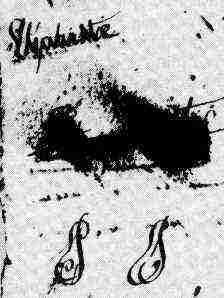
Stephanie这个名字在伽罗瓦的一份手稿中作为边注出现了几次。见THIS LINK。
伽罗瓦于5月30日与Perscheux d'Herbinville决斗,决斗的原因尚不清楚,但肯定与Stephanie有关。
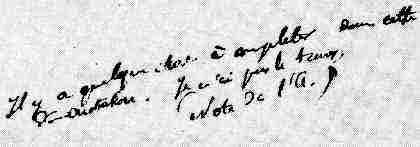
伽罗瓦在决斗前夜所写手稿页边的一条旁注写道
这个证明中还有一些内容需要完成。我没有时间了。(作者注)。
你可以在THIS LINK看到这条注释。
正是这一点导致了传说,说他用最后一夜写下了他所知道的关于group theory的一切。这个故事似乎被夸大了。
伽罗瓦在决斗中受伤,被d'Herbinville和他自己的助手们遗弃,被一个农民发现。他于5月31日在科钦医院去世,葬礼于6月2日举行。这成为一次共和派集会的焦点,随后发生了持续数天的骚乱。
伽罗瓦的兄弟和他的朋友Chevalier抄写了他的数学论文,并将它们寄给了卡尔·弗里德里希·高斯、卡尔·古斯塔夫·雅各布·雅可比等人。伽罗瓦曾希望卡尔·古斯塔夫·雅各布·雅可比和卡尔·弗里德里希·高斯能对他的工作发表意见。没有任何记录显示这些人做出过任何评论。然而,这些论文到达了约瑟夫·刘维尔手中,他在1843年9月向科学院宣布,他在伽罗瓦的论文中发现了一个简洁的解法
……对这个美妙的问题,既正确又深刻:给定一个prime次不可约方程,判定它是否可用根式求解。
约瑟夫·刘维尔于1846年在他的期刊上发表了伽罗瓦的这些论文。
伽罗瓦在这些论文中概述的理论现在被称为伽罗瓦理论。
Évariste Galois' father Nicholas Gabriel Galois and his mother Adelaide Marie Demante were both intelligent and well educated in philosophy, classical literature and religion. However there is no sign of any mathematical ability in any of Galois' family. His mother served as Galois' sole teacher until he was 12 years old. She taught him Greek, Latin and religion where she imparted her own scepticism to her son. Galois' father was an important man in the community and in 1815 he was elected mayor of Bourg-la-Reine.
You can see a map of Paris in the 19th Century, showing Bourg-la-Reine at THIS LINK.
The starting point of the historical events which were to play a major role in Galois' life is surely the storming of the Bastille on 14 July 1789. From this point the monarchy of Louis 16th was in major difficulties as the majority of Frenchmen composed their differences and united behind an attempt to destroy the privileged establishment of the church and the state.
Despite attempts at compromise Louis 16th was tried after attempting to flee the country. Following the execution of the King on 21 January 1793 there followed a reign of terror with many political trials. By the end of 1793 there were 4595 political prisoners held in Paris. However France began to have better times as their armies, under the command of Napoleon Bonaparte, won victory after victory.
Napoleon became first Consul in 1800 and then Emperor in 1804. The French armies continued a conquest of Europe while Napoleon's power became more and more secure. In 1811 Napoleon was at the height of his power. By 1815 Napoleon's rule was over. The failed Russian campaign of 1812 was followed by defeats, the Allies entering Paris on 31 March 1814. Napoleon abdicated on 6 April and Louis XVIII was installed as King by the Allies. The year 1815 saw the famous one hundred days. Napoleon entered Paris on March 20, was defeated at Waterloo on 18 June and abdicated for the second time on 22 June. Louis XVIII was reinstated as King but died in September 1824, Charles X becoming the new King.
Galois was by this time at school. He had enrolled at the Lycée of Louis-le-Grand as a boarder in the 4 th class on 6 October 1823. Even during his first term there was a minor rebellion and 40 pupils were expelled from the school. Galois was not involved and during 1824-25 his school record is good and he received several prizes. However in 1826 Galois was asked to repeat the year because his work in rhetoric was not up to the required standard.
February 1827 was a turning point in Galois' life. He enrolled in his first mathematics class, the class of Hypolyte Vernier (1800-1875). He quickly became absorbed in mathematics and his director of studies wrote
It is the passion for mathematics which dominates him, I think it would be best for him if his parents would allow him to study nothing but this, he is wasting his time here and does nothing but torment his teachers and overwhelm himself with punishments.
Galois' school reports began to describe him as singular, bizarre, original and closed. It is interesting that perhaps the most original mathematician who ever lived should be criticised for being original. Vernier reported however
Intelligence, marked progress but not enough method.
In 1828 Galois took the examination of the École Polytechnique but failed. It was the leading University of Paris and Galois must have wished to enter it for academic reasons. However, he also wished to enter this school because of the strong political movements that existed among its students, since Galois followed his parents example in being an ardent republican.
Back at Louis-le-Grand, Galois enrolled in the mathematics class of Louis Richard. However he worked more and more on his own researches and less and less on his schoolwork. He studied Legendre's Géométrie and the treatises of Lagrange. As Richard was to report
This student works only in the highest realms of mathematics.
In April 1829 Galois had his first mathematics paper published on continued fractions in the Annales de mathématiques. On 25 May and 1 June he submitted articles on the algebraic solution of equations to the Académie des Sciences. Cauchy was appointed as referee of Galois' paper.
Tragedy was to strike Galois for on 2 July 1829 his father committed suicide. The priest of Bourg-la-Reine forged Mayor Galois' name on malicious forged epigrams directed at Galois' own relatives. Galois' father was a good natured man and the scandal that ensued was more than he could stand. He hanged himself in his Paris apartment only a few steps from Louis-le-Grand where his son was studying. Galois was deeply affected by his father's death and it greatly influenced the direction his life was to take.
A few weeks after his father's death, Galois presented himself for examination for entry to the École Polytechnique for the second time. For the second time he failed, perhaps partly because he took it under the worst possible circumstances so soon after his father's death, partly because he was never good at communicating his deep mathematical ideas. Galois therefore resigned himself to enter the École Normale, which was an annex to Louis-le-Grand, and to do so he had to take his Baccalaureate examinations, something he could have avoided by entering the École Polytechnique.
He passed, receiving his degree on 29 December 1829. His examiner in mathematics reported:-
This pupil is sometimes obscure in expressing his ideas, but he is intelligent and shows a remarkable spirit of research.
His literature examiner reported:-
This is the only student who has answered me poorly, he knows absolutely nothing. I was told that this student has an extraordinary capacity for mathematics. This astonishes me greatly, for, after his examination, I believed him to have but little intelligence.
Galois sent Cauchy further work on the theory of equations, but then learned from Bulletin de Férussac of a posthumous article by Abel which overlapped with a part of his work. Galois then took Cauchy's advice and submitted a new article On the condition that an equation be soluble by radicals in February 1830. The paper was sent to Fourier, the secretary of the Paris Academy, to be considered for the Grand Prize in mathematics. Fourier died in April 1830 and Galois' paper was never subsequently found and so never considered for the prize.
Galois, after reading Abel and Jacobi's work, worked on the theory of elliptic functions and abelian integrals. With support from Jacques Sturm, he published three papers in Bulletin de Férussac in April 1830. However, he learnt in June that the prize of the Academy would be awarded the Prize jointly to Abel (posthumously) and to Jacobi, his own work never having been considered.
July 1830 saw a revolution. Charles 10th fled France. There was rioting in the streets of Paris and the director of École Normale, M. Guigniault, locked the students in to avoid them taking part. Galois tried to scale the wall to join the rioting but failed. In December 1830 M. Guigniault wrote newspaper articles attacking the students and Galois wrote a reply in the Gazette des Écoles, attacking M. Guigniault for his actions in locking the students into the school. For this letter Galois was expelled and he joined the Artillery of the National Guard, a Republican branch of the militia. On 31 December 1830 the Artillery of the National Guard was abolished by Royal Decree since the new King Louis-Phillipe felt it was a threat to the throne.
Two minor publications, an abstract in Annales de Gergonne (December 1830) and a letter on the teaching of science in the Gazette des Écoles ( 2 January 1831) were the last publications during his life. In January 1831 Galois attempted to return to mathematics. He organised some mathematics classes in higher algebra which attracted 40 students to the first meeting but after that the numbers quickly fell off. Galois was invited by Poisson to submit a third version of his memoir on equation to the Academy and he did so on 17 January.
On 18 April Sophie Germain wrote a letter to her friend the mathematician Libri which describes Galois' situation.
.. the death of M. Fourier, have been too much for this student Galois who, in spite of his impertinence, showed signs of a clever disposition. All this has done so much that he has been expelled form École Normale. He is without money... . They say he will go completely mad. I fear this is true.
Late in 1830 19 officers from the Artillery of the National Guard were arrested and charged with conspiracy to overthrow the government. They were acquitted and on 9 May 1831 200 republicans gathered for a dinner to celebrate the acquittal. During the dinner Galois raised his glass and with an open dagger in his hand appeared to make threats against the King, Louis-Phillipe. After the dinner Galois was arrested and held in Sainte-Pélagie prison. At his trial on 15 June his defence lawyer claimed that Galois had said
To Louis-Phillipe, if he betrays
but the last words had been drowned by the noise. Galois, rather surprisingly since he essentially repeated the threat from the dock, was acquitted.
The 14th of July was Bastille Day and Galois was arrested again. He was wearing the uniform of the Artillery of the National Guard, which was illegal. He was also carrying a loaded rifle, several pistols and a dagger. Galois was sent back to Sainte-Pélagie prison. While in prison he received a rejection of his memoir. Poisson had reported that:-
His argument is neither sufficiently clear nor sufficiently developed to allow us to judge its rigour.
He did, however, encourage Galois to publish a more complete account of his work. While in Sainte-Pélagie prison Galois attempted to commit suicide by stabbing himself with a dagger but the other prisoners prevented him. While drunk in prison he poured out his soul
Do you know what I lack my friend? I confide it only to you: it is someone whom I can love and love only in spirit. I have lost my father and no one has ever replaced him, do you hear me...?
In March 1832 a cholera epidemic swept Paris and prisoners, including Galois, were transferred to the pension Sieur Faultrier. There he apparently fell in love with Stephanie-Felice du Motel, the daughter of the resident physician. After he was released on 29 April Galois exchanged letters with Stephanie, and it is clear that she tried to distance herself from the affair.
The name Stephanie appears several times as a marginal note in one of Galois' manuscripts. See THIS LINK.
Galois fought a duel with Perscheux d'Herbinville on 30 May, the reason for the duel not being clear but certainly linked with Stephanie.
A marginal note in the margin of the manuscript that Galois wrote the night before the duel reads
There is something to complete in this demonstration. I do not have the time. (Author's note).
You can see this note at THIS LINK.
It is this which has led to the legend that he spent his last night writing out all he knew about group theory. This story appears to have been exaggerated.
Galois was wounded in the duel and was abandoned by d'Herbinville and his own seconds and found by a peasant. He died in Cochin hospital on 31 May and his funeral was held on 2 June. It was the focus for a Republican rally and riots followed which lasted for several days.
Galois' brother and his friend Chevalier copied his mathematical papers and sent them to Gauss, Jacobi and others. It had been Galois' wish that Jacobi and Gauss should give their opinions on his work. No record exists of any comment these men made. However the papers reached Liouville who, in September 1843, announced to the Academy that he had found in Galois' papers a concise solution
...as correct as it is deep of this lovely problem: Given an irreducible equation of prime degree, decide whether or not it is soluble by radicals.
Liouville published these papers of Galois in his Journal in 1846.
The theory that Galois outlined in these papers is now called Galois theory.
正文里的方括号编号指向这里,悬停即可直接看到条目。书目保留原文——译了书名反而查不到文献。
原站列出的延伸阅读与外部数据库,照原样保留,目标多为英文页面。
关于埃瓦里斯特·伽罗瓦的其它页面:
原站的交叉引用。指向本站已镜像专题的留在站内,其余仍指回原站。