数学家传记
亚伯拉罕·棣莫弗是一位法国出生的数学家,开创了解析几何和概率论的发展。
亚伯拉罕·棣莫弗出生于维特里勒弗朗索瓦,此地大约位于巴黎与南锡之间,他的父亲在那里做外科医生。家境肯定不算富裕,但稳定的收入意味着他们不能被称作贫穷。De Moivre的父母是胡格诺派教徒,但他最初就读于维特里的基督教兄弟会天主教学校,那是一所宽容的学校,考虑到当时法国的宗教紧张局势,尤其如此。他十一岁时,父母把他送到色当的新教学院,在那里他跟随Du Rondel学习了四年希腊语。
南特敕令自1598年起就保障了法国的信仰自由,然而,尽管它使在法国扩展新教崇拜在法律上成为可能,却遭到罗马天主教神职人员和法国各地议会的极大憎恨。尽管有敕令,色当的新教学院还是在1682年被取缔,棣莫弗被迫迁离,随后在索米尔学习逻辑学直到1684年。虽然数学不是他所学课程的一部分,棣莫弗还是在业余时间阅读数学著作。他尤其读了克里斯蒂安·惠更斯关于赌博游戏的论著De ratiociniis in ludo aleae Ⓣ(赌博游戏中的推理)。此时棣莫弗的父母已迁居巴黎,因此他去那里是很自然的。他在阿库尔学院继续学业,在那里修读物理学课程,并第一次接受了正式的数学训练,私下跟随雅克·奥扎南学习。
1685年路易十四撤销南特敕令后,对新教徒的宗教迫害变得非常严重,导致胡格诺派教徒被驱逐。此时棣莫弗因宗教信仰被囚禁在圣马丁修道院。他被关押了多久并不清楚,因为罗马天主教传记作者指出此后不久他就移居英格兰,而他的新教传记作者则说他被监禁至1688年4月27日,之后才前往英格兰。抵达伦敦后,他成为数学私人教师,走访他所教的学生,也在伦敦的咖啡馆里授课。
到伦敦时,棣莫弗已是一位有能力的数学家,熟知许多标准著作。然而,在他带着一封介绍信拜访德文郡伯爵之后,有人给他看了艾萨克·牛顿的Principia。他立刻意识到这是一部远比他此前研读过的著作更为深刻的作品,并决定必须阅读并理解这部杰作。他买了一本,把书页裁开,以便随时随身携带几页,在从一个学生赶往另一个学生的途中阅读。尽管这不是研究Principia的理想环境,但棣莫弗能迅速掌握这部艰深著作,这显示了他的能力。De Moivre曾希望获得一个数学讲席,但外国人在英格兰处于不利地位,因此尽管他现在摆脱了宗教歧视,作为在英格兰的法国人,他仍然遭受歧视。下面我们描述一些为他谋取讲席的尝试。
到1692年,棣莫弗已结识爱德蒙·哈雷,后者当时是皇家学会的助理秘书,此后不久他又遇到了艾萨克·牛顿并与之交好。他的第一篇数学论文源于他在Principia中对流数的研究,1695年3月,爱德蒙·哈雷将这篇第一篇论文Method of fluxions提交给皇家学会。1697年,他当选为皇家学会会士。
1710年,棣莫弗被皇家学会任命加入一个委员会,审查艾萨克·牛顿和哥特弗里德·威廉·莱布尼茨关于谁发现了微积分的相互竞争的主张。他被任命到这个委员会是由于他与艾萨克·牛顿的友谊。Royal Society知道它想要的答案!同样有趣的是,尽管棣莫弗发现无法获得大学职位,却被授予这一重要职位。
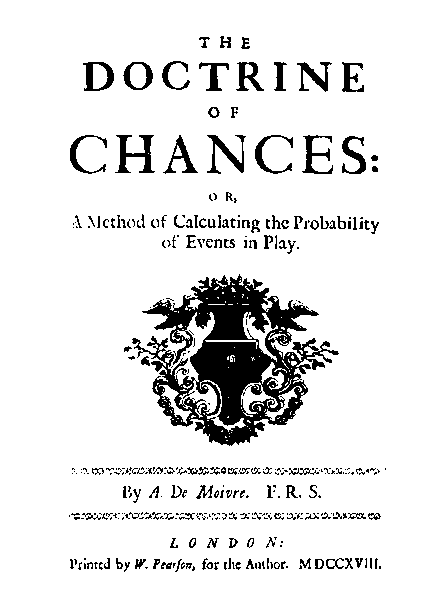
棣莫弗开创了解析几何和theory of probability的发展。他于1718年出版了The Doctrine of Chances: A method of calculating the probability of events in play,尽管拉丁文版本已于1711年提交给皇家学会并在Philosophical Transactions中发表。事实上,后来成为拉德诺伯爵的Francis Robartes向棣莫弗建议,他应提出比皮耶·黑蒙·德蒙马特在Essay d'analyse sur les jeux de hazardⓉ(《机会游戏分析论》,1708年)中所提出的更广泛概率论原理图景。显然,皮耶·黑蒙·德蒙马特的这部著作以及棣莫弗在索米尔时读过的克里斯蒂安·惠更斯的著作,包含了棣莫弗在其著作中攻击的问题,这导致皮耶·黑蒙·德蒙马特就原创性和优先权与棣莫弗发生争执。与棣莫弗曾评判的艾萨克·牛顿-哥特弗里德·威廉·莱布尼茨之争不同,与皮耶·黑蒙·德蒙马特的争论似乎已友好解决。统计独立性的定义出现在这本书中,同时还有许多关于骰子和其他游戏的问题。
事实上,The Doctrine of Chances在1718年、1738年和1756年出现了新的扩充版。例如在[5]中,Dupont考察了最早由皮耶·黑蒙·德蒙马特提出、并由棣莫弗在1738年版的第XXXIV题和第XXXV题中加以推广的“相遇博弈”。第XXXIV题如下:——
任取若干个互不相同的字母 a、b、c、d、e、f 等,随意抽取:求其中某些字母恰好处于它们在字母表中应得位置,而同时另一些字母则被错置的概率。
第 XXXV 题通过允许字母 中的每一个重复一定次数,推广了第 XXXIV 题。“赌徒破产”问题作为第 LXV 题出现在 1756 年版中。Dupont 在 [6] 中考察了这个问题以及 艾萨克·托德夯特 的解法。事实上,在 A history of the mathematical theory of probability(伦敦,1865 年)中,艾萨克·托德夯特 说概率:-
……更多地归功于 [棣莫弗],而非任何其他数学家,唯一的例外是 皮埃尔·西蒙·拉普拉斯。
1756 年版的 The Doctrine of Chances 包含了可能是 棣莫弗 在这一领域最重要的贡献,即在试验次数很大时用正态分布逼近二项分布。De Moivre 首次在 1733 年 11 月 13 日的一本拉丁文小册子中发表了这一结果(关于有趣的讨论见 [4]),目的是改进 雅各布·伯努利 的大数定律。该著作包含 [1]:-
……正态概率积分的首次出现。他甚至似乎已经察觉到了现在称为标准差的参数,尽管他没有为之命名……
棣莫弗 还研究了死亡统计和年金理论的基础。爱德蒙·哈雷 的一项创新性工作是制作了布雷斯劳城的死亡率表,基于五年的数据,他于 1693 年发表。这是最早将人口中的死亡与年龄联系起来的工作之一,对寿险精算表的制作产生了很大影响。几乎可以肯定,棣莫弗 与 爱德蒙·哈雷 的友谊导致了他对年金的兴趣,他于 1724 年发表了 Annuities on lives。后来的版本出现在 1743 年、1750 年、1752 年和 1756 年。他的贡献主要基于 爱德蒙·哈雷 的数据,其重要性在于他的 [1]:-
……基于假设的死亡率法则和货币的固定利率推导年金公式。在这里可以找到对多生命联合年金、年金继承、年金联合体费用公平分摊问题以及其他同时涉及年龄和资本利息的契约的处理。
在Miscellanea Analytica(1730)中出现了斯特林公式(被错误地归于斯特林),棣莫弗在1733年用它推导出正态曲线作为二项分布的近似。在该书1738年的第二版中,棣莫弗将公式的一项改进归功于斯特林。De Moivre写道:-
我停止继续推进,直到我那位可敬而博学的朋友斯特林先生——他在我之后也从事了那项研究——[发现 c = √(2 π)]。
棣莫弗也因其关于以下公式而被人铭记
该公式将三角学带入分析,并在复数理论的早期发展中很重要。它以这种形式出现在棣莫弗于1722年发表的一篇论文中,但一个密切相关的公式曾出现在棣莫弗于1707年发表的一篇较早论文中。
尽管棣莫弗在科学上享有盛名,他的主要收入却来自做数学私人教师,他死于贫困。他迫切想得到剑桥的一个讲席,便恳求约翰·伯努利说服哥特弗里德·威廉·莱布尼茨写信支持他。哥特弗里德·威廉·莱布尼茨在1710年这样做了,向哥特弗里德·威廉·莱布尼茨解释说棣莫弗正过着贫困悲惨的生活。事实上,哥特弗里德·威廉·莱布尼茨在1673年到伦敦时曾见过棣莫弗,并试图为棣莫弗在德国谋得一个教授职位,但没有成功。甚至像艾萨克·牛顿和爱德蒙·哈雷这样有影响力的英国朋友也无法帮他获得一个大学职位。De Moivre[3]:-
……是艾萨克·牛顿的密友,他过去每天傍晚都从咖啡馆(很可能是斯劳特咖啡馆)把他接到自己家中进行哲学讨论,他在那里度过了大部分时间。
棣莫弗修订了艾萨克·牛顿的Optics的拉丁文译本,并将The Doctrine of Chances献给他。艾萨克·牛顿回敬道,对那些就Principia[1]向他提问的人说:-
去找棣莫弗先生;他比我更懂这些事情。
艾格尼兹·玛丽·克勒克在[3]中写到了他的性格:-
他未婚,晚年平静地从事研究。古代和现代文学为他提供消遣;他曾说,他宁愿做莫里哀也不愿做艾萨克·牛顿;他对莫里哀和拉伯雷的作品几乎能背诵。他一生都是坚定的基督徒。在视力和听力相继衰退之后,他仍然能够为自己于1754年6月27日当选为巴黎科学院的外国通讯院士而欣喜若狂。
棣莫弗和吉罗拉莫·卡尔达诺一样,以预测自己的死亡日期而闻名。他发现每晚多睡15分钟,将等差数列求和,计算出他将在睡满24小时的那一天死去。他说对了!
Abraham de Moivre was born in Vitry-le-François, which is about halfway between Paris and Nancy, where his father worked as a surgeon. The family was certainly not well off financially, but a steady income meant that they could not be described as poor. De Moivre's parents were Protestants but he first attended the Catholic school of the Christian Brothers in Vitry which was a tolerant school, particularly so given the religious tensions in France at this time. When he was eleven years old his parents sent him to the Protestant Academy at Sedan where he spent four years studying Greek under Du Rondel.
The Edict of Nantes had guaranteed freedom of worship in France since 1598 but, although it made any extension of Protestant worship in France legally possible, it was much resented by the Roman Catholic clergy and by the local French parliaments. Despite the Edict, the Protestant Academy at Sedan was suppressed in 1682 and de Moivre, forced to move, then studied logic at Saumur until 1684. Although mathematics was not a part of the course that he was studying, de Moivre read mathematics texts in his own time. In particular he read Huygens' treatise on games of chance De ratiociniis in ludo aleae Ⓣ. By this time de Moivre's parents had gone to live in Paris so it was natural for him to go there. He continued his studies at the Collège de Harcourt where he took courses in physics and for the first time had formal mathematics training, taking private lessons from Ozanam.
Religious persecution of Protestants became very serious after Louis XIV revoked the Edict of Nantes in 1685, leading to the expulsion of the Huguenots. At this time de Moivre was imprisoned for his religious beliefs in the priory of St Martin. It is unclear how long he was kept there, since Roman Catholic biographers indicate that soon after this he emigrated to England while his Protestant biographers say that he was imprisoned until 27 April 1688 after which he travelled to England. After arriving in London he became a private tutor of mathematics, visiting the pupils whom he taught and also teaching in the coffee houses of London.
By the time he arrived in London de Moivre was a competent mathematician with a good knowledge of many of the standard texts. However after he made a visit to the Earl of Devonshire, carrying with him a letter of introduction, he was shown Newton's Principia. He realised instantly that this was a work far deeper than those which he had studied and decided that he would have to read and understand this masterpiece. He purchased a copy, cut up the pages so that he could carry a few with him at all times, and as he travelled from one pupil to the next he read them. Although this was not the ideal environment in which to study the Principia, it is a mark of de Moivre's abilities that he was quickly able to master the difficult work. De Moivre had hoped for a chair of mathematics, but foreigners were at a disadvantage in England so although he now was free from religious discrimination, he still suffered discrimination as a Frenchman in England. We describe below some attempts to procure a chair for him.
By 1692 de Moivre had got to know Halley, who was at this time assistant secretary of the Royal Society, and soon after that he met Newton and became friendly with him. His first mathematics paper arose from his study of fluxions in the Principia and in March 1695 Halley communicated this first paper Method of fluxions to the Royal Society. In 1697 he was elected a fellow of the Royal Society.
In 1710 de Moivre was appointed to the Commission set up by the Royal Society to review the rival claims of Newton and Leibniz to be the discovers of the calculus. His appointment to this Commission was due to his friendship with Newton. The Royal Society knew the answer it wanted! It is also interesting that de Moivre should be given this important position despite finding it impossible to gain a university post.
De Moivre pioneered the development of analytic geometry and the theory of probability. He published The Doctrine of Chances: A method of calculating the probability of events in play in 1718 although a Latin version had been presented to the Royal Society and published in the Philosophical Transactions in 1711. In fact it was Francis Robartes, who later became the Earl of Radnor, who suggested to de Moivre that he present a broader picture of the principles of probability theory than those which had been presented by Montmort in Essay d'analyse sur les jeux de hazard Ⓣ (1708). Clearly this work by Montmort and that by Huygens which de Moivre had read while at Saumur, contained the problems which de Moivre attacked in his work and this led Montmort to enter into a dispute with de Moivre concerning originality and priority. Unlike the Newton-Leibniz dispute which de Moivre had judged, the argument with Montmort appears to have been settled amicably. The definition of statistical independence appears in this book together with many problems with dice and other games.
In fact The Doctrine of Chances appeared in new expanded editions in 1718, 1738 and 1756. For example in [5] Dupont looks at the "jeu de rencontre" first put forward by Montmort and generalised by de Moivre in Problems XXXIV and XXXV of the 1738 edition. Problem XXXIV reads as follows:-
Any number of letters a, b, c, d, e, f, etc., all of them different, being taken promiscuously as it happens: to find the probability that some of them shall be found in their places according to the rank they obtain in the alphabet; and that others of them shall at the same time be displaced.
Problem XXXV generalises Problem XXXIV by allowing each of the letters to be repeated a certain number of times. The "gamblers' ruin" problem appears as Problem LXV in the 1756 edition. Dupont looks at this problem, and Todhunter's solution, in [6]. In fact in A history of the mathematical theory of probability (London, 1865), Todhunter says that probability:-
... owes more to [de Moivre] than any other mathematician, with the single exception of Laplace.
The 1756 edition of The Doctrine of Chances contained what is probably de Moivre's most significant contribution to this area, namely the approximation to the binomial distribution by the normal distribution in the case of a large number of trials. De Moivre first published this result in a Latin pamphlet dated 13 November 1733 (see [4] for an interesting discussion) aiming to improve on Jacob Bernoulli's law of large numbers. The work contains [1]:-
... the first occurrence of the normal probability integral. He even appears to have perceived, although he did not name, the parameter now called the standard deviation ...
De Moivre also investigated mortality statistics and the foundation of the theory of annuities. An innovative piece of work by Halley had been the production of mortality tables, based on five years of data, for the city of Breslau which he published in 1693. It was one of the earliest works to relate mortality and age in a population and was highly influential in the production of actuarial tables in life insurance. It is almost certain that de Moivre's friendship with Halley led to his interest in annuities and he published Annuities on lives in 1724. Later editions appeared in 1743, 1750, 1752 and 1756. His contribution, based mostly on Halley's data, is important because of his [1]:-
... derivation of formulas for annuities based on a postulated law of mortality and constant rates of interest on money. Here one finds the treatment of joint annuities on several lives, the inheritance of annuities, problems about the fair division of the costs of a tontine, and other contracts in which both age and interest on capital are relevant.
In Miscellanea Analytica (1730) appears Stirling's formula (wrongly attributed to Stirling) which de Moivre used in 1733 to derive the normal curve as an approximation to the binomial. In the second edition of the book in 1738 de Moivre gives credit to Stirling for an improvement to the formula. De Moivre wrote:-
I desisted in proceeding farther till my worthy and learned friend Mr James Stirling, who had applied after me to that inquiry, [discovered that c = √(2 π)].
De Moivre is also remembered for his formula for
which took trigonometry into analysis, and was important in the early development of the theory of complex numbers. It appears in this form in a paper which de Moivre published in 1722, but a closely related formula had appeared in an earlier paper which de Moivre published in 1707.
Despite de Moivre's scientific eminence his main income was as a private tutor of mathematics and he died in poverty. Desperate to get a chair in Cambridge he begged Johann Bernoulli to persuade Leibniz to write supporting him. He did so in 1710 explaining to Leibniz that de Moivre was living a miserable life of poverty. Indeed Leibniz had met de Moivre when he had been in London in 1673 and tried to obtain a professorship for de Moivre in Germany, but with no success. Even his influential English friends like Newton and Halley could not help him obtain a university post. De Moivre [3]:-
... was the intimate friend of Newton, who used to fetch him each evening, for philosophical discourse at his own house, from the coffee-house (probably Slaughter's), where he spent most of his time.
Indeed de Moivre revised the Latin translation of Newton's Optics and dedicated The Doctrine of Chances to him. Newton returned the compliment by saying to those who questioned him on the Principia [1]:-
Go to Mr De Moivre; he knows these things better than I do.
Clerke writes of his character in [3]:-
He was unmarried, and spent his closing years in peaceful study. Literature, ancient and modern, furnished his recreation; he once said that he would rather have been Molière than Newton; and he knew his works and those of Rabelais almost by heart. He continued all his life a steadfast Christian. After sight and hearing had successively failed, he was still capable of rapturous delight at his election as a foreign associate of the Paris Academy of Sciences on 27 June 1754.
De Moivre, like Cardan, is famed for predicting the day of his own death. He found that he was sleeping 15 minutes longer each night and summing the arithmetic progression, calculated that he would die on the day that he slept for 24 hours. He was right!
正文里的方括号编号指向这里,悬停即可直接看到条目。书目保留原文——译了书名反而查不到文献。
原站列出的延伸阅读与外部数据库,照原样保留,目标多为英文页面。
关于亚伯拉罕·棣莫弗的其它页面:
原站的交叉引用。指向本站已镜像专题的留在站内,其余仍指回原站。