数学家传记
泰勒斯是已知的第一位希腊哲学家、科学家和数学家。他被认为提出了五个初等几何定理。
泰勒斯是Examyes和Cleobuline的儿子。有些人说他的父母来自泰勒斯,但另一些人报告说他们是腓尼基人。J Longrigg在[1]中写道:-
但多数意见认为他血统上是真正的米利都人,出身于一个显赫家族。
泰勒斯似乎是已知的第一位希腊哲学家、科学家和数学家,尽管他的职业是工程师。人们相信他是阿那克西曼德(公元前611年 - 公元前545年)的老师,并且是米利都学派的第一位自然哲学家。然而,他的著作无一存世,因此很难确定他的观点或确证他的数学发现。事实上,不清楚他是否写过任何著作,如果他写过,到亚里士多德时代肯定已经失传,因为亚里士多德无法接触到泰勒斯的任何著作。另一方面,有人声称他写了一本关于航海的书,但这些说法证据不足。在这本关于航海的书里,有人提出他在航海技术中使用了小熊星座,并对其进行了定义,作为一项重要特征。即使这本书是虚构的,泰勒斯确实定义了小熊星座也是很有可能的。
普罗克洛,最后一位重要的希腊哲学家,生活在大约公元450年,写道:-
[泰勒斯]首先前往埃及,并从那里将这门研究[几何学]引入希腊。他自己发现了许多命题,并将许多其他命题背后的原理传授给他的后继者,他处理问题的方法在某些情况下具有更大的普遍性,在另一些情况下则更倾向于简单的检视和观察。
在撰写关于泰勒斯及类似时期其他人物的内容时存在一个困难。尽管有大量关于泰勒斯的参考文献,足以让我们重建相当多的细节,但必须谨慎对待这些来源,因为当时的习惯是把并非名人做出的发现归功于他们。部分原因是像泰勒斯这样的人物获得了传奇地位,部分原因是那些学科历史相对较短的科学家试图通过赋予其主题历史背景来提升其地位。
泰勒斯是一位极具声望的人物,是苏格拉底之前唯一一位位列七贤的哲学家。普鲁塔克在论述这七位贤人时说(见[8]):-
[泰勒斯]显然是其中唯一一位在思辨中超越实用界限的人,其余的人则在政治方面获得了智慧的声誉。
普鲁塔克的这一评论不应被理解为泰勒斯没有作为政治家发挥作用。事实上他确实发挥了作用。他说服了爱奥尼亚的各个独立城邦组成以特奥斯为首都的联邦。他劝阻同胞不要接受与克罗伊索斯的联盟,从而拯救了这座城市。
据记载,泰勒斯预言了公元前585年的日食。当时月食约19年的周期已广为人知,但日食的周期更难发现,因为日食在地球上不同地点可见。泰勒斯对公元前585年日食的预测很可能只是基于当时可能发生日食的知识所作的猜测。关于泰勒斯使用巴比伦的沙罗周期(长度为18年10天8小时的周期)来预测日食的说法,已被奥托·纽格包尔证明极不可能,因为奥托·纽格包尔在[11]中指出沙罗周期是爱德蒙·哈雷的发明。奥托·纽格包尔写道[11]:-
……对于在给定地点可见的日食,不存在任何周期:所有现代周期都涉及整个地球。公元前600年不存在任何预测日食的巴比伦理论,从400年后极不令人满意的情况可以看出这一点,巴比伦人也从未发展出任何考虑地理纬度影响的理论。
在公元前585年5月28日的日食之后,希罗多德写道:-
……白天突然变成了夜晚。这一事件已被米利都的泰勒斯预言,他预先警告了爱奥尼亚人,并确定了它发生的确切年份。当米底人和吕底亚人观察到这一变化时,他们停止了战斗,并同样渴望达成和平条款。
Longrigg在[1]中甚至怀疑泰勒斯是通过猜测预测了日食,他写道:-
……一个更可能的解释似乎仅仅是,泰勒斯恰好是这一引人注目的天文现象发生时在场的学者,于是人们假定,作为学者,他必定能够预测它。
关于泰勒斯如何测量金字塔的高度,有几种记载。公元二世纪的第欧根尼·拉尔修引用了亚里士多德[6]的学生Hieronymus的话(或见[8]):-
Hieronymus说,[泰勒斯]甚至成功地通过观察当我们的影子等于我们自身高度时金字塔影子的长度来测量金字塔。
这似乎不包含任何微妙的几何知识,仅仅是一种经验观察:当某一物体的影长与其高度相等的瞬间,那么对所有其他物体也同样如此。普林尼也作了类似的陈述(见[8]):-
泰勒斯发现了如何求得金字塔及所有其他类似物体的高度,即通过在物体与其影子长度相等的时刻测量该物体的影子。
然而,⟦L1⟧以另一种形式讲述了这个故事,如果准确的话,那将意味着泰勒斯正在接近相似三角形的思想:-
……无需费力,也无需任何工具的帮助,[他]仅仅在金字塔投下的影子的末端立起一根木棍,这样借助太阳光线的照射构成了两个三角形,……证明了金字塔与木棍之比等于[金字塔的]影子与[木棍的]影子之比
当然,泰勒斯可能曾运用这些几何方法来解决实际问题,但他仅仅是观察到了这些性质,而并未理解证明一个几何定理意味着什么。这与伯特兰·罗素的观点一致,后者在[12]中论述了泰勒斯对数学的贡献:-
据说泰勒斯曾游历埃及,并从那里将几何学带给了希腊人。埃及人所知的几何主要是经验法则,没有理由相信泰勒斯得出了演绎证明,如后来希腊人所发现的那样。
另一方面,巴特尔·伦德特·范德瓦尔登 [16] 声称 泰勒斯 将几何学置于逻辑基础之上,并且十分清楚证明几何定理的概念。然而,尽管有大量证据表明 泰勒斯 对几何学做出了一些基础性贡献,但人们很容易以我们自己的知识来解读他的贡献,从而相信 泰勒斯 对几何学的理解比他所可能达到的更为充分。在许多数学史教科书中,泰勒斯 被归功于初等几何的五个定理:-
这些说法的依据是什么?公元450年左右写作的 普罗克洛 是前四个说法的依据,在第三和第四个说法中,他引用了 罗德岛的欧德摩斯 的著作 History of Geometry 作为来源,而 罗德岛的欧德摩斯 是 亚里士多德 的学生。罗德岛的欧德摩斯 的 History of Geometry 现已失传,但没有理由怀疑 普罗克洛。第五个定理被认为出自 泰勒斯,因为第欧根尼·拉尔修写于公元二世纪的著作 Lives of eminent philosophers 中有这样一段话 [6]:-
潘菲勒说,从埃及人那里学习几何学的 泰勒斯 是第一个在圆上描述一个直角三角形的人,并且(由于这一发现)献祭了一头牛。然而,其他人,包括计算者 阿波罗多罗斯,说这是 毕达哥拉斯。
然而,对史料的更深入考察表明,即使这些史料是准确的,我们可能也把过多的功劳归于 泰勒斯 了。例如,普罗克洛 在描述(ii)时使用了一个含义更接近“相似”而非“相等”的词。很可能 泰勒斯 甚至没有测量角度的方法,因此“相等的角”不会是一个他能精确理解的概念。他可能只是声称“等腰三角形的底角看起来相似”。定理(iv)被 罗德岛的欧德摩斯 归于 泰勒斯,其理由远非完全令人信服。普罗克洛 写道(见 [8]):-
[欧德摩斯]说,泰勒斯 展示如何求船只到岸距离的方法必然涉及使用这一定理。
托马斯·利特尔·希思 在 [8] 中给出了 泰勒斯 可能用来计算海上船只距离的三种不同方法。他认为 泰勒斯 最可能使用的方法是用一个由两根木棍钉成十字形的仪器,使它们可以绕钉子旋转。观察者然后走到塔顶,将一根木棍垂直放置(比如用铅垂线),然后绕钉子旋转第二根木棍,直到它指向船只。接着,观察者旋转整个仪器,保持其固定且垂直,直到可移动的木棍指向陆地上一个合适的点。这个点到塔底的距离等于到船只的距离。
尽管定理 (iv) 是这一应用的基础,但泰勒斯完全有可能在不了解任何“全等三角形”的情况下设计出这种方法。
作为对这五个定理的最后评论,关于定理 (iv) 有着相互矛盾的说法,第欧根尼·拉尔修本人也意识到了这一点。而且,就连潘菲勒也不能被当作权威,因为她生活在公元一世纪,远在泰勒斯的时代之后。其他人则把献祭一头牛的故事归于毕达哥拉斯发现了毕达哥拉斯的定理。当然,其中有许多混乱,几乎没有确定性。
我们对泰勒斯哲学的了解归功于亚里士多德,他在其形而上学中写道:-
泰勒斯教导说‘万物是水’。
正如Brumbaugh在[5]中所写:-
……对于今天我们所知道的科学和哲学来说,这可能看起来是一个没有希望的开端;但是,在它所产生的神话背景之下,这是革命性的。
Sambursky在[15]中写道:-
正是泰勒斯首先构想出通过少量假设来解释物质所有各种表现形式的众多现象的原理。
泰勒斯认为地球浮在水上,万物由水生成。在他看来,地球是一个平坦的圆盘,漂浮在无垠的海洋上。也有人声称,泰勒斯从地球浮在水上这一事实出发解释了地震。同样,泰勒斯思想的重要性在于,他是记载中第一个试图用理性而非超自然手段解释这类现象的人。
有趣的是,关于泰勒斯,既有讲述他伟大实践技能的故事,也有讲述他是一个不谙世事的梦想家的故事。例如,亚里士多德讲述了一个故事,说泰勒斯如何运用自己的技能推断出下一季的橄榄收成将会非常大。因此他买下了所有的橄榄压榨机,随后当丰收的橄榄果然到来时,他得以发了一笔财。另一方面,柏拉图讲述了一个故事,说有一天晚上泰勒斯一边走路一边凝视天空,结果掉进了一条沟里。一个漂亮的女仆把他拉了出来,并对他说:“如果你连脚下的东西都看不见,又怎么能指望理解天上正在发生什么呢?”正如 Brumbaugh 所说,也许这是西方第一个心不在焉的教授笑话!
上图所示的泰勒斯半身像位于罗马的卡比托利欧博物馆,但它与泰勒斯并非同时代,而且不太可能与他有任何相似之处。
Thales of Miletus was the son of Examyes and Cleobuline. His parents are said by some to be from Miletus but others report that they were Phoenicians. J Longrigg writes in [1]:-
But the majority opinion considered him a true Milesian by descent, and of a distinguished family.
Thales seems to be the first known Greek philosopher, scientist and mathematician although his occupation was that of an engineer. He is believed to have been the teacher of Anaximander (611 BC - 545 BC) and he was the first natural philosopher in the Milesian School. However, none of his writing survives so it is difficult to determine his views or to be certain about his mathematical discoveries. Indeed it is unclear whether he wrote any works at all and if he did they were certainly lost by the time of Aristotle who did not have access to any writings of Thales. On the other hand there are claims that he wrote a book on navigation but these are based on little evidence. In the book on navigation it is suggested that he used the constellation Ursa Minor, which he defined, as an important feature in his navigation techniques. Even if the book is fictitious, it is quite probable that Thales did indeed define the constellation Ursa Minor.
Proclus, the last major Greek philosopher, who lived around 450 AD, wrote:-
[Thales] first went to Egypt and thence introduced this study [geometry] into Greece. He discovered many propositions himself, and instructed his successors in the principles underlying many others, his method of attacking problems had greater generality in some cases and was more in the nature of simple inspection and observation in other cases.
There is a difficulty in writing about Thales and others from a similar period. Although there are numerous references to Thales which would enable us to reconstruct quite a number of details, the sources must be treated with care since it was the habit of the time to credit famous men with discoveries they did not make. Partly this was as a result of the legendary status that men like Thales achieved, and partly it was the result of scientists with relatively little history behind their subjects trying to increase the status of their topic with giving it an historical background.
Certainly Thales was a figure of enormous prestige, being the only philosopher before Socrates to be among the Seven Sages. Plutarch, writing of these Seven Sages, says that (see [8]):-
[Thales] was apparently the only one of these whose wisdom stepped, in speculation, beyond the limits of practical utility, the rest acquired the reputation of wisdom in politics.
This comment by Plutarch should not be seen as saying that Thales did not function as a politician. Indeed he did. He persuaded the separate states of Ionia to form a federation with a capital at Teos. He dissuaded his compatriots from accepting an alliance with Croesus and, as a result, saved the city.
It is reported that Thales predicted an eclipse of the Sun in 585 BC. The cycle of about 19 years for eclipses of the Moon was well known at this time but the cycle for eclipses of the Sun was harder to spot since eclipses were visible at different places on Earth. Thales's prediction of the 585 BC eclipse was probably a guess based on the knowledge that an eclipse around that time was possible. The claims that Thales used the Babylonian saros, a cycle of length 18 years 10 days 8 hours, to predict the eclipse has been shown by Neugebauer to be highly unlikely since Neugebauer shows in [11] that the saros was an invention of Halley. Neugebauer wrote [11]:-
... there exists no cycle for solar eclipses visible at a given place: all modern cycles concern the earth as a whole. No Babylonian theory for predicting a solar eclipse existed at 600 BC, as one can see from the very unsatisfactory situation 400 years later, nor did the Babylonians ever develop any theory which took the influence of geographical latitude into account.
After the eclipse on 28 May, 585 BC Herodotus wrote:-
... day was all of a sudden changed into night. This event had been foretold by Thales, the Milesian, who forewarned the Ionians of it, fixing for it the very year in which it took place. The Medes and Lydians, when they observed the change, ceased fighting, and were alike anxious to have terms of peace agreed on.
Longrigg in [1] even doubts that Thales predicted the eclipse by guessing, writing:-
... a more likely explanation seems to be simply that Thales happened to be the savant around at the time when this striking astronomical phenomenon occurred and the assumption was made that as a savant he must have been able to predict it.
There are several accounts of how Thales measured the height of pyramids. Diogenes Laertius writing in the second century AD quotes Hieronymus, a pupil of Aristotle [6] (or see [8]):-
Hieronymus says that [Thales] even succeeded in measuring the pyramids by observation of the length of their shadow at the moment when our shadows are equal to our own height.
This appears to contain no subtle geometrical knowledge, merely an empirical observation that at the instant when the length of the shadow of one object coincides with its height, then the same will be true for all other objects. A similar statement is made by Pliny (see [8]):-
Thales discovered how to obtain the height of pyramids and all other similar objects, namely, by measuring the shadow of the object at the time when a body and its shadow are equal in length.
Plutarch however recounts the story in a form which, if accurate, would mean that Thales was getting close to the idea of similar triangles:-
... without trouble or the assistance of any instrument [he] merely set up a stick at the extremity of the shadow cast by the pyramid and, having thus made two triangles by the impact of the sun's rays, ... showed that the pyramid has to the stick the same ratio which the shadow [of the pyramid] has to the shadow [of the stick]
Of course Thales could have used these geometrical methods for solving practical problems, having merely observed the properties and having no appreciation of what it means to prove a geometrical theorem. This is in line with the views of Russell who writes of Thales contributions to mathematics in [12]:-
Thales is said to have travelled in Egypt, and to have thence brought to the Greeks the science of geometry. What Egyptians knew of geometry was mainly rules of thumb, and there is no reason to believe that Thales arrived at deductive proofs, such as later Greeks discovered.
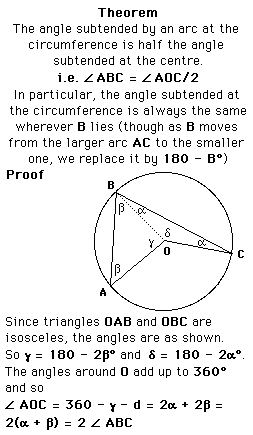
On the other hand B L van der Waerden [16] claims that Thales put geometry on a logical footing and was well aware of the notion of proving a geometrical theorem. However, although there is much evidence to suggest that Thales made some fundamental contributions to geometry, it is easy to interpret his contributions in the light of our own knowledge, thereby believing that Thales had a fuller appreciation of geometry than he could possibly have achieved. In many textbooks on the history of mathematics Thales is credited with five theorems of elementary geometry:-
What is the basis for these claims? Proclus, writing around 450 AD, is the basis for the first four of these claims, in the third and fourth cases quoting the work History of Geometry by Eudemus of Rhodes, who was a pupil of Aristotle, as his source. The History of Geometry by Eudemus is now lost but there is no reason to doubt Proclus. The fifth theorem is believed to be due to Thales because of a passage from Diogenes Laertius book Lives of eminent philosophers written in the second century AD [6]:-
Pamphile says that Thales, who learnt geometry from the Egyptians, was the first to describe on a circle a triangle which shall be right-angled, and that he sacrificed an ox (on the strength of the discovery). Others, however, including Apollodorus the calculator, say that it was Pythagoras.
A deeper examination of the sources, however, shows that, even if they are accurate, we may be crediting Thales with too much. For example Proclus uses a word meaning something closer to 'similar' rather than 'equal- in describing (ii). It is quite likely that Thales did not even have a way of measuring angles so 'equal- angles would have not been a concept he would have understood precisely. He may have claimed no more than "The base angles of an isosceles triangle look similar". The theorem (iv) was attributed to Thales by Eudemus for less than completely convincing reasons. Proclus writes (see [8]):-
[Eudemus] says that the method by which Thales showed how to find the distances of ships from the shore necessarily involves the use of this theorem.
Heath in [8] gives three different methods which Thales might have used to calculate the distance to a ship at sea. The method which he thinks it most likely that Thales used was to have an instrument consisting of two sticks nailed into a cross so that they could be rotated about the nail. An observer then went to the top of a tower, positioned one stick vertically (using say a plumb line) and then rotating the second stick about the nail until it points at the ship. Then the observer rotates the instrument, keeping it fixed and vertical, until the movable stick points at a suitable point on the land. The distance of this point from the base of the tower is equal to the distance to the ship.
Although theorem (iv) underlies this application, it would have been quite possible for Thales to devise such a method without appreciating anything of 'congruent triangles'.
As a final comment on these five theorems, there are conflicting stories regarding theorem (iv) as Diogenes Laertius himself is aware. Also even Pamphile cannot be taken as an authority since she lived in the first century AD, long after the time of Thales. Others have attributed the story about the sacrifice of an ox to Pythagoras on discovering Pythagoras's theorem. Certainly there is much confusion, and little certainty.
Our knowledge of the philosophy of Thales is due to Aristotle who wrote in his Metaphysics :-
Thales of Miletus taught that 'all things are water'.
This, as Brumbaugh writes [5]:-
...may seem an unpromising beginning for science and philosophy as we know them today; but, against the background of mythology from which it arose, it was revolutionary.
Sambursky writes in [15]:-
It was Thales who first conceived the principle of explaining the multitude of phenomena by a small number of hypotheses for all the various manifestations of matter.
Thales believed that the Earth floats on water and all things come to be from water. For him the Earth was a flat disc floating on an infinite ocean. It has also been claimed that Thales explained earthquakes from the fact that the Earth floats on water. Again the importance of Thales' idea is that he is the first recorded person who tried to explain such phenomena by rational rather than by supernatural means.
It is interesting that Thales has both stories told about his great practical skills and also about him being an unworldly dreamer. Aristotle, for example, relates a story of how Thales used his skills to deduce that the next season's olive crop would be a very large one. He therefore bought all the olive presses and then was able to make a fortune when the bumper olive crop did indeed arrive. On the other hand Plato tells a story of how one night Thales was gazing at the sky as he walked and fell into a ditch. A pretty servant girl lifted him out and said to him "How do you expect to understand what is going on up in the sky if you do not even see what is at your feet". As Brumbaugh says, perhaps this is the first absent-minded professor joke in the West!
The bust of Thales shown above is in the Capitoline Museum in Rome, but is not contemporary with Thales and is unlikely to bear any resemblance to him.
正文里的方括号编号指向这里,悬停即可直接看到条目。书目保留原文——译了书名反而查不到文献。
原站列出的延伸阅读与外部数据库,照原样保留,目标多为英文页面。
关于泰勒斯的其它页面:
原站的交叉引用。指向本站已镜像专题的留在站内,其余仍指回原站。