数学家传记
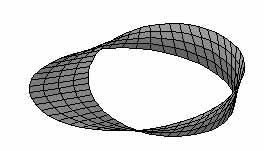
奥古斯特·费迪南德·莫比乌斯最为人所知的是他在拓扑学方面的工作,尤其是他对奥古斯特·费迪南德·莫比乌斯带的构想,这是一种只有一个面的二维曲面。
奥古斯特·费迪南德·莫比乌斯是舞蹈教师Johann Heinrich Möbius的独生子,后者在莫比乌斯三岁时去世。他的母亲是马丁·路德的后裔。莫比乌斯在家中接受教育直到13岁,当时他已经表现出对数学的兴趣,于1803年进入Schulpforta的学院。
1809年,莫比乌斯从学院毕业,成为莱比锡大学的学生。他的家人希望他学习法律,事实上他也开始学习这门学科。然而,他很快发现这不是一门能给他带来满足感的学科,在入学第一年的年中,他决定追随自己的偏好而非家人的意愿。因此,他开始学习数学、天文学和物理学。
在莱比锡期间,对莫比乌斯影响最大的老师是他的天文学老师卡尔·莫尔魏德。尽管卡尔·莫尔魏德是一位天文学家,但他因若干数学发现而闻名,特别是他在1807-09年发现的卡尔·莫尔魏德三角关系以及保持面积的卡尔·莫尔魏德地图投影。
1813年,莫比乌斯前往哥廷根,在卡尔·弗里德里希·高斯指导下学习天文学。卡尔·弗里德里希·高斯是哥廷根天文台的台长,但当然也是他那个时代最伟大的数学家,所以莫比乌斯再次师从一位兴趣在于数学的天文学家。从哥廷根,莫比乌斯前往哈勒,在约翰·约翰·弗里德里希·普法夫——卡尔·弗里德里希·高斯的老师——指导下学习。在约翰·弗里德里希·普法夫指导下,他学习的是数学而非天文学,因此到这一阶段,莫比乌斯已非常坚定地在这两个领域工作。
1815年,莫比乌斯 撰写了关于 The 掩星 of fixed stars 的学位论文,并开始着手他的 教授资格论文(Habilitation) 论文。事实上,在他撰写这篇论文期间,曾有人试图征召他加入普鲁士军队。莫比乌斯 写道
这是我听说过的最可怕的想法,任何胆敢、冒险、冒风险、大胆、有勇气提出它的人,都逃不过我的匕首。
他避开了军队,完成了关于 Trigonometrical equations 的任教资格论文。卡尔·莫尔魏德 对数学的兴趣如此之大,以至于他从天文学转到了莱比锡的数学讲席,因此 莫比乌斯 对他可能被任命为莱比锡天文学教授抱有很高的期望。事实上,他于1816年被任命为莱比锡大学天文学与高等力学讲席。他最初的任命是编外教授,这是一个在他职业生涯早期就到来的任命。
莫比乌斯没有迅速晋升为正教授。看来他不是一个特别好的讲师,这使他的生活困难,因为他没有吸引到付费学生来听他的课。他被迫将他的课程宣传为免费,然后学生才认为他的课程值得选修。
1816年,他获得了在格赖夫斯瓦尔德担任天文学家的职位,1819年又获得了在多尔帕特担任数学家的职位。他拒绝了这两个职位,部分是因为他相信莱比锡大学的高质量,部分是因为他对萨克森的忠诚。1825年,卡尔·莫尔魏德去世,莫比乌斯希望转到他的数学讲席,走卡尔·莫尔魏德先前走过的路。然而事与愿违,另一位数学家被优先考虑担任该职位。
到1844年,莫比乌斯作为研究者的声誉使他收到了耶拿大学的邀请,此时莱比锡大学授予他天文学正教授职位,这显然是他应得的。
从他在莱比锡首次任职时起,莫比乌斯还担任了莱比锡天文台的观测员。他参与了天文台的重建工作,并从1818年到1821年监督该项目。在为新天文台提出建议之前,他参观了德国的其他几个天文台。1820年他结婚,育有一个女儿和两个儿子。1848年,他成为天文台台长。
1844年,赫尔曼·格拉斯曼拜访了莫比乌斯。他请莫比乌斯评论他的主要著作Die lineale Ausdehnungslehre, ein neuer Zweig der Mathematik Ⓣ(线性扩张理论,数学的一个新分支)(1844年),其中包含许多与莫比乌斯的工作相似的结果。然而,莫比乌斯没有理解赫尔曼·格拉斯曼工作的重要性,没有进行评论。但他确实说服赫尔曼·格拉斯曼提交作品参加评奖,在赫尔曼·格拉斯曼获奖后,莫比乌斯于1847年确实为他的获奖作品写了一篇评论。
尽管他最著名的工作是在数学领域,莫比乌斯确实发表了重要的天文学工作。他写了De Computandis Occultationibus Fixarum per Planetas Ⓣ(计算行星的掩星)(1815年),涉及行星的掩星。他还写了关于天文学原理的著作,Die Hauptsätze der Astronomie Ⓣ(天文学定律)(1836年)以及关于天体力学的Die Elemente der Mechanik des Himmels Ⓣ(天体力学基础)(1843年)。
莫比乌斯 的数学出版物,尽管并不总是原创,却是有效而清晰的表述。他的传记作者 Richard Baltzer 在 [3] 中这样描述他对数学的贡献:-
他研究的灵感大多来自他自己原创思想的丰富源泉。他的直觉、他为自己设定的问题,以及他找到的解答,都展现出某种非凡的巧妙,某种不造作的原创性。他不慌不忙地工作,安静地独自进行。他的工作几乎一直锁藏着,直到一切都各就各位。不匆忙,不浮夸,不傲慢,他等待自己思想的果实成熟。只有在这样的等待之后,他才发表他完善的作品……
几乎莫比乌斯的所有工作都发表在奥古斯都·利奥波德·克雷勒的杂志上,这是第一本专门发表数学的杂志。莫比乌斯1827年的著作Der barycentrische CalculⓉ(重心微积分),关于解析几何,成为经典,并包含了他关于射影几何和仿射几何的许多结果。在其中,他引入了齐次坐标,还讨论了几何变换,特别是射影变换。他引入了一种现在称为莫比乌斯网的构型,这在射影几何的发展中起到了重要作用。
莫比乌斯的名字与许多重要的数学对象相关联,例如他在1831年论文Über eine besondere Art von Umkehrung der Reihen Ⓣ(关于一种特殊的行反转)中引入的莫比乌斯函数,以及莫比乌斯反演公式。
1837年,他出版了Lehrbuch der StatikⓉ(《静力学教科书》),其中给出了静力学的几何处理。这导致了对空间中线系的研究。
在Francis Guthrie提出关于four colouring of maps的问题之前,莫比乌斯在1840年提出了以下相当容易的问题。
从前有一个国王,他有五个儿子。在他的遗嘱中,他声明在他死后,他的王国应由他的儿子们分成五个区域,使得每个区域都与其他四个区域有共同的边界。遗嘱的条款能否得到满足?
答案当然是否定的,而且很容易证明。然而,它确实说明了莫比乌斯对topological思想的兴趣,在这个领域,他作为先驱最为人所铭记。在一篇提交给Académie des Sciences的回忆录中,这篇回忆录在他死后才被发现,他讨论了单侧曲面的性质,包括他在1858年发现的莫比乌斯带。见THIS LINK。这一发现是在莫比乌斯研究Académie提出的多面体几何理论问题时做出的。
尽管我们今天称之为莫比乌斯带,但并不是莫比乌斯首先描述了这个对象,无论以任何标准,无论是出版日期还是首次发现日期,优先权都归于利斯廷。
莫比乌斯带是一个只有一个侧面的二维曲面。它可以如下在三维中构造。取一条矩形纸带,将纸带的两端连接在一起,使其扭转180度。现在可以从曲面上的一个点开始,描绘出一条路径,该路径经过显然位于曲面另一侧的点。
August Möbius was the only child of Johann Heinrich Möbius, a dancing teacher, who died when August was three years old. His mother was a descendant of Martin Luther. Möbius was educated at home until he was 13 years old when, already showing an interest in mathematics, he went to the College in Schulpforta in 1803.
In 1809 Möbius graduated from his College and he became a student at the University of Leipzig. His family had wanted him study law and indeed he started to study this topic. However he soon discovered that it was not a subject that gave him satisfaction and in the middle of his first year of study he decided to follow him own preferences rather than those of his family. He therefore took up the study of mathematics, astronomy and physics.
The teacher who influenced Möbius most during his time at Leipzig was his astronomy teacher Karl Mollweide. Although an astronomer, Mollweide is well known for a number of mathematical discoveries in particular the Mollweide trigonometric relations he discovered in 1807-09 and the Mollweide map projection which preserves areas.
In 1813 Möbius travelled to Göttingen where he studied astronomy under Gauss. Gauss was the director of the Observatory in Göttingen but of course the greatest mathematician of his day, so again Möbius studied under an astronomer whose interests were mathematical. From Göttingen Möbius went to Halle where he studied under Johann Pfaff, Gauss's teacher. Under Pfaff he studied mathematics rather than astronomy so by this stage Möbius was very firmly working in both fields.
In 1815 Möbius wrote his doctoral thesis on The occultation of fixed stars and began work on his Habilitation thesis. In fact while he was writing this thesis there was an attempt to draft him into the Prussian army. Möbius wrote
This is the most horrible idea I have heard of, and anyone who shall venture, dare, hazard, make bold and have the audacity to propose it will not be safe from my dagger.
He avoided the army and completed his Habilitation thesis on Trigonometrical equations. Mollweide's interest in mathematics was such that he had moved from astronomy to the chair of mathematics at Leipzig so Möbius had high hopes that he might be appointed to a professorship in astronomy at Leipzig. Indeed he was appointed to the chair of astronomy and higher mechanics at the University of Leipzig in 1816. His initial appointment was as Extraordinary Professor and it was an appointment which came early in his career.
However Möbius did not receive quick promotion to full professor. It would appear that he was not a particularly good lecturer and this made his life difficult since he did not attract fee paying students to his lectures. He was forced to advertise his lecture courses as being free of charge before students thought his courses worth taking.
He was offered a post as an astronomer in Greifswald in 1816 and then a post as a mathematician at Dorpat in 1819. He refused both, partly through his belief in the high quality of Leipzig University, partly through his loyalty to Saxony. In 1825 Mollweide died and Möbius hoped to transfer to his chair of mathematics taking the route Mollweide had taken earlier. However it was not to be and another mathematician was preferred for the post.
By 1844 Möbius's reputation as a researcher led to an invitation from the University of Jena and at this stage the University of Leipzig gave him the Full Professorship in astronomy which he clearly deserved.
From the time of his first appointment at Leipzig Möbius had also held the post of Observer at the Observatory at Leipzig. He was involved the rebuilding of the Observatory and, from 1818 until 1821, he supervised the project. He visited several other observatories in Germany before making his recommendations for the new Observatory. In 1820 he married and he was to have one daughter and two sons. In 1848 he became director of the Observatory.
In 1844 Grassmann visited Möbius. He asked Möbius to review his major work Die lineale Ausdehnungslehre, ein neuer Zweig der Mathematik Ⓣ (1844) which contained many results similar to Möbius's work. However Möbius did not understand the significance of Grassmann's work and did not review it. He did however persuade Grassmann to submit work for a prize and, after Grassmann won the prize, Möbius did write a review of his winning entry in 1847.
Although his most famous work is in mathematics, Möbius did publish important work on astronomy. He wrote De Computandis Occultationibus Fixarum per Planetas Ⓣ (1815) concerning occultations of the planets. He also wrote on the principles of astronomy, Die Hauptsätze der Astronomie Ⓣ (1836) and on celestial mechanics Die Elemente der Mechanik des Himmels Ⓣ (1843).
Möbius's mathematical publications, although not always original, were effective and clear presentations. His contributions to mathematics are described by his biographer Richard Baltzer in [3] as follows:-
The inspirations for his research he found mostly in the rich well of his own original mind. His intuition, the problems he set himself, and the solutions that he found, all exhibit something extraordinarily ingenious, something original in an uncontrived way. He worked without hurrying, quietly on his own. His work remained almost locked away until everything had been put into its proper place. Without rushing, without pomposity and without arrogance, he waited until the fruits of his mind matured. Only after such a wait did he publish his perfected works...
Almost all Möbius's work was published in Crelle's Journal, the first journal devoted exclusively to publishing mathematics. Möbius's 1827 work Der barycentrische Calcul Ⓣ, on analytical geometry, became a classic and includes many of his results on projective and affine geometry. In it he introduced homogeneous coordinates and also discussed geometric transformations, in particular projective transformations. He introduced a configuration now called a Möbius net, which was to play an important role in the development of projective geometry.
Möbius's name is attached to many important mathematical objects such as the Möbius function which he introduced in the 1831 paper Über eine besondere Art von Umkehrung der Reihen Ⓣ and the Möbius inversion formula.
In 1837 he published Lehrbuch der Statik Ⓣ which gives a geometric treatment of statics. It led to the study of systems of lines in space.
Before the question on the four colouring of maps had been asked by Francis Guthrie, Möbius had posed the following, rather easy, problem in 1840.
There was once a king with five sons. In his will he stated that on his death his kingdom should be divided by his sons into five regions in such a way that each region should have a common boundary with the other four. Can the terms of the will be satisfied?
The answer, of course, is negative and easy to show. However it does illustrate Möbius's interest in topological ideas, an area in which he is most remembered as a pioneer. In a memoir, presented to the Académie des Sciences and only discovered after his death, he discussed the properties of one-sided surfaces including the Möbius strip which he had discovered in 1858. See THIS LINK. This discovery was made as Möbius worked on a question on the geometric theory of polyhedra posed by the Académie.
Although we know this as a Möbius strip today it was not Möbius who first described this object, rather by any criterion, either publication date or date of first discovery, precedence goes to Listing.
A Möbius strip is a two-dimensional surface with only one side. It can be constructed in three dimensions as follows. Take a rectangular strip of paper and join the two ends of the strip together so that it has a 180 degree twist. It is now possible to start at a point on the surface and trace out a path that passes through the point which is apparently on the other side of the surface from .
正文里的方括号编号指向这里,悬停即可直接看到条目。书目保留原文——译了书名反而查不到文献。
原站列出的延伸阅读与外部数据库,照原样保留,目标多为英文页面。
关于奥古斯特·费迪南德·莫比乌斯的其它页面:
原站的交叉引用。指向本站已镜像专题的留在站内,其余仍指回原站。