数学家传记
恩斯特·阿贝是一位德国仪器制造者,他在透镜设计方面做出了重要改进。
恩斯特·阿贝的父亲格奥尔格·Adam Abbe(1813-1874)是一名纺纱工,但极难维持家计。格奥尔格于1813年8月18日出生在费尔德河畔菲施巴赫,1838年4月17日在艾森纳赫与伊丽莎白·克里斯蒂娜·巴尔希费尔特(1809-1857)结婚。伊丽莎白于1809年6月29日出生在艾森纳赫,格奥尔格与伊丽莎白育有两个孩子:本传记的主人公阿贝,以及1841年4月28日出生在艾森纳赫的约翰娜·索菲(人称索菲)。伊丽莎白·克里斯蒂娜于1857年7月去世后,格奥尔格于1859年11月17日在艾森纳赫与伊娃·Margaretha Lindemann(1807-1878)结婚。
格拉策写道[11]:-
作为爱森纳赫一家工厂里贫穷的纺纱监工的儿子,[阿贝]目睹了每天14到16小时的劳作,伴随着低工资、恶劣的环境、粗劣的食物、对家庭生活和教育的忽视,对他父亲和其他人造成的退化影响。
肯德尔在[14]中,用类似的说法描述了阿贝的童年:-
他的童年是在贫困中度过的,他的父亲每天站立工作16小时,连吃饭的时间都没有。然而,阿贝获得了奖学金,并在他父亲的雇主的帮助下完成了学业。
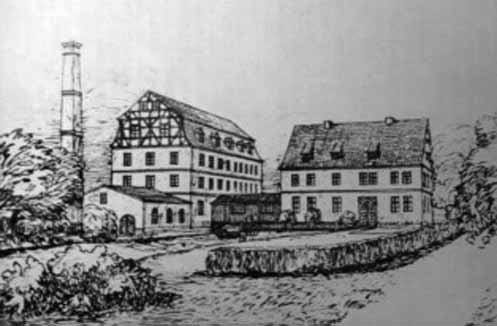
这些引文清楚地表明,阿贝的成长经历是理解他一生的关键,因此让我们更详细地考察一下。格奥尔格Adam Abbe在结婚前是一名书籍印刷工,但后来受雇于艾歇尔-施特赖贝尔纺纱厂。这家纺纱织造公司成立于18世纪,是爱森纳赫的第一家工业制造公司,也是该镇的主要雇主。艾歇尔-施特赖贝尔家族拥有爱森纳赫郊区的伯格米勒大楼,他们的一些工人就住在那里,阿贝一家搬进了伯格米勒。生活很艰难,格奥尔格每天必须工作14到16个小时。当阿贝五岁时,他不得不把父亲的午餐装在盒子里送去。他的父亲会靠在机器上匆匆吃完,然后迅速把空盒子还给阿贝,又继续工作。在后来的生活中写到自己的童年时,阿贝解释说,看到像他父亲这样的工人受到剥削,他感到多么痛苦。
Burgmühle 的一张照片在 THIS LINK。
这些恶劣的工作条件是导致1848年欧洲大部分地区爆发革命的因素之一。在德意志各邦,还有另一个因素,即统一的推动力。从1848年春天开始,革命者取得了出人意料的成功。当然,许多人有着不同的目标,这很快就在改革者之间造成了严重的分歧和争论。到1849年夏天,贵族发动了反革命,普鲁士警察国家开始残酷迫害革命者,以摧毁他们的革命精神。起初,艾森纳赫所在的图林根邦并未受到反革命的波及,因此,许多来自其他邦的革命者逃到那里避难。Georg Abbe不是革命者,但他是一个自由思想者,竭尽全力帮助那些逃避普鲁士警察的人[30]:-
他把他们藏在磨坊内一个狭长的房间里,那里不容易被发现,而且他只是一两年前才发现这个房间。在反复的搜查中,阿贝不得不给难民们适当的信号以使他们保持镇静。其中一人是一位重要的革命者,因受伤不得不长期停留。当他离开的日子到来时,阿贝不得不在夜里把他带到一个偏僻的地方,那里有一辆马车等着他继续旅程。这样就避免了如果父亲被人看见与陌生人在一起并且陌生人被认出来而遭到怀疑的风险……
费利克斯·奥尔巴赫写道,目睹普鲁士警察国家对那些为民主权利和社会进步而斗争的人的迫害,必定是阿贝后来自由民主和人道主义观点的基础,也是他[3]这一事实的基础:-
……从未完全克服对普鲁士及其国家特性的厌恶,相反,他对图林根各邦,尤其是萨克森-魏玛的地方爱国主义增强了。
从七岁起,阿贝在艾森纳赫上小学。他很快表现出对学习的热情和相当强的能力,因此,四年后,他的老师建议他继续在当地实科中学——大公实科文理中学接受教育,该校成立于1843年,越来越多地教授数学、科学和现代语言科目。然而,阿贝的父亲认为这不可能,因为如果没有经济支持,他根本无法负担。尤利乌斯·冯·艾歇尔-施特赖贝尔(1820-1905)当时经营着阿贝父亲工作的纺纱厂,他说他愿意资助阿贝的学业,条件是完成学业后他要为工厂工作。他在实科中学的学习异常顺利,因为学校专门教授他觉得最令人兴奋的科目。该校校长是古斯塔夫·A·克普博士(1819-1903),他教授数学和物理。他对科学实验充满热情,并确保他的教室里配备了各种科学仪器。从1854年秋天起,阿贝的出色表现使他获得了奖学金,以支付学费。然而,他从小身体就不好,经常遭受严重的头痛。这些头痛将影响他的一生。
阿贝展现出非凡的才能,尤其在数学和自然科学方面,并坚持在家自学,在周日和假日借书阅读。从1856年4月起,他开始参加自然科学协会的会议。该协会是在卡尔·爱德华·马丁(Carl Eduard Martin,1838-1907)的建议下成立的,他当时是艾森纳赫的一名学生,协会由大公实科中学的科学教师卡尔·弗里德里希·费迪南德·森夫特(Karl Friedrich Ferdinand Senft,1810-1893)组织。我们注意到费迪南德·森夫特于1857年出版了Lehrbuch der forstlichen Naturkunde Ⓣ(森林自然史教科书)。协会成员是来自艾森纳赫两所中学的学生,每两周聚会一次,进行讲座和讨论。1856年10月,阿贝作了题为“太阳系的起源”的讲座,七周后又作了“光与运动”的讲座。阿贝于1856年8月至11月担任协会的司库,从1856年12月起直到1857年4月2日离开艾森纳赫,他一直担任协会的“图书管理员和档案员”,这个角色非常吸引他。在大公实科中学的最后一年,他通过给班上一些同学上英语和法语课赚了一些外快。
在学校最后两年,老师们为他准备提前一年参加考试,与同龄人不同。他利用暑假补上课堂上未涉及的内容,进行额外的阅读和科学实验。他于1856年9月15日参加了数学和英语笔试,9月16日参加了法语、化学和物理笔试,9月17日参加了德语笔试,作文题目是“歌德青年时期的性格与经历”。他于1857年2月26日至3月21日参加了“高中毕业考试”,七门科目获得“优秀”,另外三门获得“良好”:法语、绘画和宗教。
阿贝能够继续在大学学习,至少在两个方面非常幸运。其中之一是魏玛政府直到1856年12月17日才出台法规,允许实科文理中学的优秀学生进入大学。第二件幸运的事涉及阿贝的父亲与Julius von Eichel-Streiber达成的协议,即阿贝在中学教育结束后将在工厂工作。甚至在他参加“Abitur考试”之前,von Eichel-Streiber就已同意不再坚持该协议。很可能校长Gustav Köpp曾代表阿贝与von Eichel-Streiber交涉,因为我们确实知道他非常看重这位杰出的学生。
阿贝于1857年复活节后进入耶拿州立大学,这是他在萨克森-魏玛-艾森纳赫大公国的“本地大学”。对他影响最大的大学教师是Christian Philipp Karl Snell(1806-1886),他教授无穷小分析在几何中的应用、平面解析几何、分析力学、光学以及力学的物理基础。他还师从雅各布·赫尔曼 Karl Julius Traugott Schaeffer(1824-1900),后者教授解析几何、应用物理、代数分析,并对电报和其他电子设备感兴趣。阿贝还听了植物学家Matthias Jacob Schleiden(1804-1881)和古生物学家阿贝 Erhard Friedrich Wilhelm Schmid(1815-1885)的讲座。在耶拿有两名学生曾是阿贝在艾森纳赫的同学,即我们上面提到的Carl Martin,以及与阿贝在耶拿最后两个学期合租公寓的Ludwig Pfeiffer(1842-1921)。1858年复活节,他结识了一位稍年长的学生,来自Helmstedt的Heinrich Eggeling。
大学的负责人是 Karl Julius Moritz Seebeck(1805-1884),他在1858年9月3日为一项政府奖撰写了一封支持阿贝的信(见[22]):-
阿贝的工作对那位有能力的教员来说会特别令人满意,尽管阿贝只是一个第三学期的学生,并且完全没有外部资助。他的老师们向我保证,他无疑天生就是成为职业科学家的料。
作为耶拿的一名本科生,他赢得了若干奖项,还通过私人教学赚了一些外快。
耶拿的数学学会由赫尔曼舍费尔主持,阿贝于1858年6月3日向学会作了题为“永久气体中热与功等价的归纳证明”的讲座。
由于对耶拿的教学不满,阿贝于1859年5月15日离开了耶拿大学,并在 Karl Snell 的建议下,继续在哥廷根大学学习。在那里,他听了波恩哈德·黎曼、威廉·韦伯和莫里茨·亚伯拉罕·斯特恩的课程,尽管他把莫里茨·亚伯拉罕·斯特恩的讲座描述为“相当枯燥”。他还受教于天文学家和气象学家阿贝 Friedrich Wilhelm Klinkerfues(1827-1884),后者曾是卡尔·弗里德里希·高斯在哥廷根天文台的助手,并在那里在卡尔·弗里德里希·高斯的指导下写了他的博士学位论文Über eine neue Methode die Bahnen der Doppelsterne zu berechnen Ⓣ(使用一种新方法计算双星的轨道)(1855年)。在哥廷根,阿贝在生活开支方面遇到了困难[22]:-
哥廷根的住房和生活条件明显比耶拿昂贵,但除了奖学金之外,他设法获得了必要的更多资金,部分是通过给本国和外国学生上私人课,部分是通过解决悬赏问题。
在威廉·韦伯的指导下,他撰写了关于热力学的学位论文,题为 Erfahrungsmässige Begründung des Satzes von der Aequivalenz zwischen Wärme und mechanischer Arbeit Ⓣ(基于经验的热与机械功等价原理的证明),并于1861年3月16日通过答辩后,于3月23日从哥廷根获得学位。1860年9月底,他曾前往耶拿,并与他们讨论了他希望在1863年复活节在那里进行habilitate的愿望。要求是博士学位与取得授课资格之间必须至少间隔两年,因此他必须找一份工作两年。他获得了美因河畔法兰克福的一个职位。
法兰克福的物理协会想任命一名助手,而阿贝还在哥廷根时,已于1861年5月24日前往那里,在次日进行试讲。不幸的是,他在讲座当天头痛得非常厉害,不得不推迟到5月29日。董事会无法就任命他做出决定,并告诉他必须等到下一年。法兰克福的任命仍然对他开放,在艾森纳赫度过暑假后,他开始在周四晚上和周日讲课。然而,物理协会的任命从未实现,他担心收入不足。他的前校长Gustav Köpp为他提供了一些工作,救了他。
阿贝于1963年4月18日抵达耶拿,此前他在艾森纳赫父亲的家中度过了一段时间,准备他的授课资格论文,并立即受到Karl Snell最友好的欢迎。他提交了20页的Über die Gesetzmässigkeit in der Vertheilung bei Beobachtungsreihen Ⓣ(关于一系列观测中分布的规律性)作为他的授课资格论文。莫里斯·肯得尔,见[14]或[16],写道:-
O B Sheynin最近提请注意阿贝在1863年提交的一篇极为出色的论文,其中阿贝不仅推导出了分布,还推导出了R L 奥斯卡·安德尔森(1942)的序列相关系数分布。……这篇论文是一项极其出色的工作,也许是迄今为止发现的对后来分布理论研究的最显著的预见。
阿贝作为Privatdocent在耶拿大学任教的最初几年在[5]中有描述:-
1863年,阿贝在耶拿取得授课资格(以对实验数据中误差分布和最小二乘法的研究),从而成为那里的编外讲师。他的讲座,至少在他最初几年,通常只有一两个学生听,从未超过十几个;他是一位糟糕的讲师。尽管他最初教授数学和物理方面几种不同类型的课程,但后来他将授课限制在光学的特定方面。相比之下,他的实验物理实验室课程更为成功;在不同学期中,他吸引了大约十七名学生。在他最初几年的教学中,阿贝和他学生所能使用的只有最原始、过时的仪器;而他所谓的实验室实际上只是一个棚屋,一直使用到1880年,当时它在动物学家阿贝 Haeckel来访期间倒塌了!在耶拿教授实验物理的物质问题只会加重阿贝沉重的教学负担。在1863年写给他密友Harald Schütz的一封信中,他讨论了他关于测量仪器理论的课程,并在此过程中揭示了在耶拿教授物理的困难:
“但接着就是实验。起初我几乎没有考虑它们,因为物理柜里几乎没有什么值得注意的测量仪器,我本可以用它们来演示。然而,我很快发现,一种测量仪器理论,如此完全抽象,没有所描述仪器的伴随演示,也没有实践练习,是极其无聊的东西,如果我不能将实际演示加入其中,我的讲座课程就得不到多少认可。……因此,日复一日,我不得不操心构建或让人构建新的演示仪器。此外,如果要适应我当前的讲座课程,这需要尽快完成。……你从未接触过物理实验,所以你无法想象,当一个人要用如此不足的资源、用自己的双手拼凑出一台还过得去的仪器时,需要花费多少时间和麻烦。”
在这最初几年里,阿贝不得不把大部分时间花在教学组织上,因此很少有时间从事研究。事实上,他在1863年至1870年间没有发表任何东西。因此,他在1869年申请从私人讲师晋升为编外教授被拒绝,也就不足为奇了。然而,在接下来的一年里,他发表了Über einen Spektralapparat am MikroskopⓉ(《论显微镜上的光谱装置》)。Felix Auerbach 在谈到阿贝在这部著作[3]中所描述的光谱目镜时写道:-
凭借简单的资源,它使显微镜能够用于光谱观测;它代表了对同一类型的较早构造的重大改进。无需深入细节,有一点应当注意:即1870年关于这一装置的报道是阿贝在耶拿的第一篇发表物;同时,这一装置是蔡司工场根据阿贝的想法制造出的第一件真正的新构造。
这篇出色的论文是他于1870年被任命为耶拿物理学和数学编外教授的一个因素;这意味着他有了结婚的经济保障。1871年9月24日,他与Marianne Elisabeth Snell(通称Else)结婚,她是耶拿大学物理系主任Karl Snell及其妻子Anna Voland(1815-1846)的女儿。Else Snell(1844-1914)于1844年9月14日出生在耶拿。Else和阿贝有两个女儿:Margarete 阿贝(1872-1945)和Pauline Abbe(1874-1945)。
1878年,他被任命为耶拿天文台和耶拿气象台的台长。1866年,卡尔·蔡司就各种光学问题找过阿贝。这使他的注意力转向了光学和天文学。除了大学职位外,阿贝于1866年被任命为蔡司光学工场的研究主任。1868年,他发明了用于显微镜的复消色差透镜系统。这一重要突破消除了显微镜的初级和次级色差。
阿贝取得的其他光学进展包括对放大率极限更清晰的理论理解,以及发现了今天所称的阿贝正弦条件,它给出了透镜形成清晰图像、没有彗形像差和球面像差缺陷的条件。这个著名公式首次出现在1873年的一篇论文中,给出了显微镜的分辨率极限为
。
他还在显微镜设计方面做出了实际改进,包括在1870年使用聚光器以对视野提供高倍均匀照明。Carl Zeiss 基金会这样描述阿贝此时的工作:-
在开始制造 Carl Zeiss 复合显微镜一年后,即1873年,阿贝先生发表了一篇科学论文,描述了使这一奇妙发明臻于完善的数学。光学设计中第一次描述并理解了像差、衍射和彗形像差。阿贝对光学过程的描述如此出色,以至于这篇论文已成为我们今天对光学科学许多理解所依赖的基础。作为对他努力的回报,Carl Zeiss 于1876年让阿贝成为其蓬勃发展的事业中的合伙人。
《Minor Contributions and Notes》中的讣告9,Astrophysical Journal 21 (1915), 379-381提供了关于他在光学仪器方面工作的更多信息;见THIS LINK。
通过他的光学工作以及与Zeiss的合作而变得富有后,阿贝于1891年设立并资助了Carl Zeiss基金会,用于科学和社会改良研究。Carl Zeiss基金会对其设立过程描述如下:-
该基金会设立了一个新的团体作为Carl Zeiss的所有者。大部分资产被转让给耶拿大学,其教育系管理大学的利益。该机构受一套由阿贝本人在学习社会学和法律两年后起草的章程约束。剩余遗产被捐赠给Carl Zeiss的雇员。
阿贝于1896年将劳资关系改革引入Zeiss光学工厂,这些改革今天听起来很平常,但远远超前于其时代。这些改革包括八小时工作制、假期工资、病假工资和养老金。我们引用Hilda Weiss关于阿贝作为社会改革者所取得的重要进展[30]:-
“八小时工作,八小时睡眠,八小时做人”,这是阿贝于1900年在德国耶拿的Zeiss光学工厂引入八小时工作制时所使用的口号。阿贝,Carl Zeiss基金会的创始人,是一位社会改革者和慈善家。他早就认识到,即使在他的工厂所建立的非常有利的社会和工作条件下,工人仍然主要是一个工人,很少是一个人,一个人类。即使是高度合格的机械精密工作,也越来越必须经历劳动分工和机械化的专业化过程。阿贝认为,做一个人是产业工人的正当要求;……
阿贝研究了劳动机械化将工人与其工具分离的影响,以及将所有权与控制权分离的公司的发展。他的研究结果证明,个人对其工作的自豪感丧失,师傅与工人之间以及工人彼此之间的传统人际关系丧失。在他的工厂里,他引入了有保障的、良好而稳定的最低工资,每个工人都能得到,并通过(a)根据个人产出的补充作为生产奖金和(b)象征分享企业利润的圣诞奖金而增加。领取养老金的权利附属于基本工资。建立了一个住房项目,不是由工厂拥有,而是由工人的合作社机构拥有。工厂基金会与大学和耶拿市一起,建立了各种教育和娱乐设施,确保工人享有愉快的社交条件和极高的生活水平。工人委员会成为德国劳动立法中工人权利的一个范例。预见到工业机械化的不良影响,阿贝向其他雇主和国家建议,工业利润的很大一部分应用于改善工人的经济和社会条件;应通过养老金和利润分享计划以及遣散费提供更大的保障;工人委员会应建立更大的社会认可和对管理责任的参与。
阿贝于1891年停止在耶拿大学任教。在长期患病之后,他于1905年1月去世,享年64岁。他被安葬在耶拿北公墓。他的妻子于1914年2月1日去世,被安葬在丈夫旁边。
阿贝纪念碑于1911年6月落成[6]:-
1911年6月30日,阿贝纪念碑落成。美国显微学会作为该工程的重要捐助者之一,受邀派代表参加,但由于时间仓促,未能派代表出席。纪念碑由Henry Van de Velde设计,饰有Constantin Mennier的浮雕;其中还包含阿贝的大理石半身像,这是Max Klinger的作品。这座建筑是一座崇高的纪念碑,纪念那位我们主要应归功于显微镜作为研究工具的有效性在一个多世纪以来所获得的最大改进的人。
你可以在THIS LINK看到这座阿贝纪念碑的照片。
卡尔·蔡司基金会于1921年9月设立了阿贝纪念奖:-
耶拿的卡尔·蔡司基金会在耶拿举行的德国数学家和物理学家会议(1921年9月)上偶尔宣布设立阿贝纪念奖,以促进数学和物理科学及其应用领域。每两年,上述领域杰出成就的10万马克利息将根据专家委员会的建议颁发。然而,由于规定资本本身可在多年内用完,这一应付金额可在每个个别情况下通过卡尔·蔡司基金会的特别决议增加。奖项还将附有一枚阿贝纪念奖章,一面显示卡尔·蔡司基金会创始人阿贝的肖像,另一面显示获奖者的功绩。
Ernst Abbe's father, Georg Adam Abbe (1813-1874), worked as a spinner but found it extremely difficult to provide for his family. Georg, who was born on 18 August 1813 in Fischbach an der Felda, had married Elisabetha Christina Barchfeldt (1809-1857) on 17 April 1838 in Eisenach. Elisabetha had been born on 29 June 1809 in Eisenach and Georg and Elisabetha had two children, Ernst, the subject of this biography, and Johanna Sophie (known as Sophie), born 28 April 1841 in Eisenach. After Elisabetha Christina died in July 1857, Georg married Eva Margaretha Lindemann (1807-1878) in Eisenach on 17 November 1859.
Glatzer writes [11]:-
As the son of a poor spinning overseer in a mill at Eisenach, [Ernst] had seen the degenerating effect on his father and others of fourteen to sixteen hours of daily toil accompanied by low wages, miserable surroundings, poor food, neglect of family life and education.
Kendall, writing in [14], describes Ernst's childhood in similar terms:-
His childhood was one of privation, his father worked on his feet 16 hours every day with no breaks for meals. Ernst, however, won scholarships and was helped through his studies by his father's employer.
These quotes indicate clearly that Abbe's upbringing was the key to understanding his life so let us examine it in more detail. Georg Adam Abbe had been a book printer before his marriage, but then was employed in the Eichel-Streiber spinning mill. This spinning and weaving company had been founded in the 18th century and was Eisenach's first industrial manufacturing company and was the main employer in the town. The Eichel-Streiber family owned the Burgmühle building on the outskirts of Eisenach where some of their workers were housed and the Abbe family moved into the Burgmühle. Life was hard and Georg had to work between 14 to 16 hours each day. When Ernst was five years old he had to take his father his lunch in a box. His father would quickly eat the meal leaning against a machine then, quickly giving the empty box back to Ernst, he resumed his work. When writing of his childhood in later life, Ernst explained how distressing he found it seeing how workers like his father were being exploited.
A picture of the Burgmühle is at THIS LINK.
These bad working conditions were one of the factors which led to revolutions breaking out over much of Europe in 1848. In the German states there was another factor, namely a push for unification. Beginning in the spring of 1848, the revolutionaries were surprisingly successful. Of course, many had different aims and this quickly resulted in serious divisions and arguments among the reformers. By the summer of 1849 the aristocracy was operating a counter-revolution and the Prussian police state began to brutally persecute the revolutionaries in order to destroy their revolutionary spirit. At first Thuringia, the state where Eisenach was situated, did not suffer from the counter-revolution and, as a consequence, many revolutionaries from other states fled there for their safety. Georg Abbe was not a revolutionary, but he was a free-thinker who did everything he could to help those escaping from the Prussian police [30]:-
He hid them in a long, narrow room inside the mill, which could not be easily found and which he had only discovered a year or two earlier. During the repeated house searches, Ernst had to give the refugees appropriate signs to keep them calm. One of them was a leading revolutionary who had to stay for a long time because he was wounded. When the day for his departure came, Ernst had to take him to a remote place that night, where a wagon was waiting for him to continue his journey. This avoided the risk of suspicion if the father had been seen with the stranger and he had been recognised ...
Felix Auerbach writes, that seeing persecution by the Prussian police state of those fighting for democratic rights and social progress must have been the foundation of Ernst Abbe's later liberal-democratic and humanistic views and of the fact that he [3]:-
... never quite overcame aversion to Prussia and its state character and, in contrast, increased local patriotism for the Thuringian states in general and Saxony-Weimar in particular.
From the age of seven, Abbe attended elementary school in Eisenach. He quickly showed an enthusiasm for learning and considerable abilities, so, after four years, his teachers recommended that he continue his education in the local Realschule, the Grossherzogliche Realgymnasium, which had been founded in 1843 and where mathematical, scientific and modern language subjects were increasingly being taught. Abbe's father, however, thought this would not be possible, since there was no way that he could afford this without financial support. Julius von Eichel-Streiber (1820-1905) was now running the spinning mill where Abbe's father worked, and he said he would support Ernst's schooling on condition that, once completed, he would work for the mill. His studies at the Realschule went exceptionally well, with the school specialising in the subjects that he found most exciting. The headmaster of the school was Dr Gustav A Köpp (1819-1903) who taught mathematics and physics. He was enthusiastic about scientific experiments and ensured that his classroom were well equipped with various pieces of scientific apparatus. From the autumn of 1854, Abbe's outstanding performance led to him receiving a scholarship to cover the school fees. His health, however, had not been good since he was a baby, and he suffered from frequent severe headaches. These would continue to affect him throughout his life.
Abbe showed extraordinary talent, especially for mathematics and natural sciences, and undertook home study, borrowing books to read on Sundays and holidays. From April 1856 he was attending meetings of the Natural Science Association. This had been founded at the suggestion of Carl Eduard Martin (1838-1907), a school pupil in Eisenach, and it was organised by Karl Friedrich Ferdinand Senft (1810-1893), a science teacher at the Grossherzogliche Realgymnasium. We note that Ferdinand Senft published Lehrbuch der forstlichen Naturkunde Ⓣ in 1857. Members of the Association were pupils from the two secondary schools in Eisenach, and it met once a fortnight for lectures and discussions. In October 1856 Abbe gave the lecture "The Origin of the Solar System" and, seven weeks later, "Light and Movement." Abbe held the role of treasurer of the Association from August to November 1856 and from December 1856 until he left Eisenach on 2 April 1857, he worked as its "Librarian and Archivist," a role which greatly appealed to him. During his last year at the Grossherzogliche Realgymnasium, he earned some extra money by giving English and French lessons to some members of his class.
During his final two years at the school his teachers were preparing him to take examinations a year earlier than those of the same age. He used the summer vacation to make up work not covered in the classes, undertaking additional reading and science experiments. He sat written examinations in mathematics and English on 15 September 1856, in French, chemistry and physics on the 16 September 1856 and in German with the essay "Goethe's character and experiences in his youth work" on 17 September 1856. He sat his "Abitur examinations" from 26 February to 21 March 1857 and received "very good" in seven subjects, and "good" in the other three: French, drawing and religion.
In at least two ways Abbe was very lucky in being able to go continue his studies at university. One of these was the fact that the Weimar government only brought in a regulation to allow top Realgymnasium pupils to attend a university on 17 December 1856. The second piece of luck concerns the agreement that Abbe's father had made with Julius von Eichel-Streiber that Ernst would work at the mill after his secondary education. Even before he took his "Abitur examinations", von Eichel-Streiber had agreed he would not insist on the agreement. It is probable that Gustav Köpp, the headmaster, had approached von Eichel-Streiber on Abbe's behalf, for we certainly know he thought very highly of his outstanding pupil.
Abbe entered the State University of Jena, his "local university" in the Grand Duchy of Saxony-Weimar-Eisenach, after Easter 1857. The university teacher who influenced him most was Christian Philipp Karl Snell (1806-1886) who taught the use of infinitesimal analysis in geometry, analytic geometry of the plane, analytical mechanics, optics, and the physical foundations of mechanics. He was also taught by Hermann Karl Julius Traugott Schaeffer (1824-1900) who instructed pupils in analytic geometry, applied physics, algebraic analysis, and was interested in the telegraph and other electronic devices. Abbe also attended lectures by the botanist Matthias Jacob Schleiden (1804-1881) and the paleontologist Ernst Erhard Friedrich Wilhelm Schmid (1815-1885). At Jena there were two students who had been fellow school pupils at Eisenach with Abbe, namely Carl Martin, whom we mentioned above, and Ludwig Pfeiffer (1842-1921) who shared an apartment with Abbe during his final two semesters at Jena. At Easter 1858 he made the acquaintance of a somewhat older student, Heinrich Eggeling from Helmstedt.
The head of the University was Karl Julius Moritz Seebeck (1805-1884) who wrote supporting Abbe for a government prize on 3 September 1858 (see [22]):-
Abbe's work would be particularly satisfactory for the competent faculty member, although Abbe is only a student in his third semester and is in no way supported by external means. His teachers assure me that he was undoubtedly born to become a professional scientist.
As an undergraduate in Jena, he won several prizes and also made some extra money by private teaching.
The Mathematical Society at Jena was run by Hermann Schaeffer and Abbe presented the lecture "Inductive proof of the equivalence of heat and work in permanent gases" to the Society on 3 June 1858.
Unhappy with the teaching at Jena, Abbe left the University of Jena on 15 May 1859 and, on the advice of Karl Snell, continued his studies at the University of Göttingen. There he attended courses by Bernhard Riemann, Wilhelm Weber and Moritz Stern, although he described Stern's lectures "quite dry." He was also taught by the astronomer and meteorologist Ernst Friedrich Wilhelm Klinkerfues (1827-1884) who had been Gauss's assistant at the Göttingen observatory where, advised by Gauss, he had written his Ph.D. dissertation Über eine neue Methode die Bahnen der Doppelsterne zu berechnen Ⓣ (1855). In Göttingen Abbe had difficulties with his living expenses [22]:-
The housing and living conditions in Göttingen were noticeably more expensive than those in Jena, but, apart from scholarships, he managed to acquire the necessary larger funds partly through private lessons to domestic and foreign students, and partly through solving prize problems.
Advised by Wilhelm Weber, he wrote his doctoral dissertation on thermodynamics entitled Erfahrungsmässige Begründung des Satzes von der Aequivalenz zwischen Wärme und mechanischer Arbeit Ⓣ and, after being examined on 16 March 1861, he received the degree from Göttingen on 23 March. He had made a trip to Jena at the end of September 1860 and had discussed with them his wish to habilitate there at Easter 1863. It was a requirement that there had to be an interval of at least two years between the doctorate and the habilitation, so he had to find employment for two years. He was offered a position in Frankfurt am Main.
The Physical Association in Frankfurt was wanting to appoint an assistant, and Abbe, while still in Göttingen, had travelled there on 24 May 1861 to give a trial lecture on the following day. Unfortunately he had a very severe headache on the day of the lecture and had to postpone it until 29 May. The board could not come to a decision about appointing him and told him he would have to wait until the following year. The appointment in Frankfurt was still open to him, and, after taking a summer holiday in Eisenach, he began lecturing on Thursday evenings and on Sundays. The appointment at the Physical Association never came about, however, and he worried about having sufficient income. Gustav Köpp, his former headmaster, came to his rescue with some work for him.
Ernst Abbe arrived in Jena on 18 April 1963 after a period devoted to the preparation of his habilitation thesis in his father's house in Eisenach, and was immediately greeted in the most friendly manner by Karl Snell. He presented the 20-page Über die Gesetzmässigkeit in der Vertheilung bei Beobachtungsreihen Ⓣ for his habilitation thesis. M G Kendall, see [14] or [16], writes:-
O B Sheynin has recently called attention to a most remarkable paper by Ernst Abbe, presented in 1863, in which Abbe derives not only the distribution, but R L Anderson's (1942) distribution of the serial correlation coefficient. ... The paper is a superbly competent piece of work and perhaps the most remarkable anticipation of later studies of distribution theory that have yet come to light.
The first years that Abbe spent teaching as a Privatdocent at the University of Jena are described in [5]:-
In 1863, Abbe habilitated at Jena (with a study of error distribution in experimental data and the method of least squares) and so became a Privatdocent there. His lectures, at least in his first years, were usually attended by only one or two students, and by never more than a dozen; he was a poor lecturer. Though he initially taught several different types of courses in both mathematics and physics, he later came to limit his lecturing to particular aspects of optics. His laboratory course in experimental physics, by contrast, proved more successful; during various semesters he attracted around seventeen students. During his first years of teaching, Abbe had only the most primitive, outdated instruments at his and his students' disposal; and his so-called laboratory was, in fact, a mere shed, which served until 1880 when it collapsed during the course of a visit by the zoologist Ernst Haeckel! The material problems of teaching experimental physics at Jena only added to Abbe's burden of a heavy teaching load. In a letter of 1863 to his close friend Harald Schütz, he discussed his course on the theory of measuring instruments and in so doing revealed the handicaps of teaching physics at Jena:
"But then came the experiments. At first I scarcely reckoned with them because the physical cabinet has almost no noteworthy measuring instruments with which I could have demonstrated. I soon saw, however, that a theory of measuring instruments, one so completely abstract and without accompanying demonstrations of the apparatus described and without practical exercises, is something damned boring, and that I would earn little approval for my lecture course if I could not join practical demonstrations to it. ... Day after day I have thus had to worry about the work of constructing or having constructed new demonstration apparatus. Moreover, this needs to be done as quickly as possible if it is to fit into my current lecture course. ... You've never been concerned with physical experiments and so you have no idea of the time and trouble it costs when one is supposed to put together a tolerable piece of apparatus with such inadequate resources and with one's own hands."
Over these first few years Abbe had to spend most of his time organising his teaching and, as a consequence, had little time for research. In fact he published nothing between 1863 and 1870. It is not surprising, therefore, that his application, in 1869, to be promoted from a Privatdocent to an Extraordinary Professor was rejected. In the following year, however, he published Über einen Spektralapparat am Mikroskop Ⓣ. Felix Auerbach writes about the spectral eyepiece that Abbe describes in this work [3]:-
With simple resources, it enables the microscope to be used for spectroscopic observations; it represents a significant improvement on an older construction of the same type. Without going into the details, one thing should be noted: namely, that the report on this apparatus made in 1870 was Abbe's first publication in Jena; and at the same time that the device is the first real new construction produced by the Zeiss workshops on the basis of Abbe's ideas.
This excellent paper was a factor in his appointment as extraordinary professor of physics and mathematics at Jena in 1870; this meant he had the financial security to marry. On 24 September 1871 he married Marianne Elisabeth Snell (known as Else), the daughter of Karl Snell, head of the physics department at the University of Jena, and his wife Anna Voland (1815-1846). Else Snell (1844-1914) had been born in Jena on 14 September 1844. Else and Ernst Abbe had two daughters: Margarete Abbe (1872-1945) and Pauline Abbe (1874-1945).
In 1878, he was appointed director of the astronomical observatory at Jena and of the meteorological observatory at Jena. Abbe had been approached by Carl Zeiss in 1866 with various optical problems. This had turned his attention towards optics and astronomy. In addition to his university posts, Abbe was made research director of the Zeiss optical works in 1866. In 1868 he invented the apochromatic lens system for the microscope. This important breakthrough eliminates both the primary and secondary colour distortion of microscopes.
Other optical advances which Abbe made include a clearer theoretical understanding of limits to magnification and the discovery the Abbe sine condition, as it is called today, which gives conditions on a lens for it to form a sharp image, without the defects of coma and spherical aberration. The famous formula, which first appears in a paper of 1873, give the resolution limit of the microscope as
.
He also made practical improvements in microscope design including, in 1870, the use of a condenser to give a high-powered even illumination of the field of view. The Carl Zeiss Foundation describes Abbe's work at this time as follows:-
One year after beginning the manufacture of the Carl Zeiss compound microscope, in 1873, Herr Abbe released a scientific paper describing the mathematics leading to the perfection of this wonderful invention. For the first time in optical design, aberration, diffraction and coma were described and understood. Abbe described the optical process so well that this paper has become the foundation upon which much of our understanding of optical science rests today. As a reward for his efforts Carl Zeiss made Abbe a partner in his burgeoning business in 1876.
The obituary [9] in Minor Contributions and Notes, Astrophysical Journal 21 (1915), 379-381 gives further information about his work on optical instruments; see THIS LINK.
Becoming wealthy through his optical work and a partnership with Zeiss, Abbe set up and endowed the Carl Zeiss Foundation for research in science and social improvement in 1891. The Carl Zeiss Foundation describes its setting up as follows:-
This foundation established a new group as the owners of Carl Zeiss. The greater portion of the assets were deeded to the University of Jena, whose Department of Education managed the universities interests. This authority was bound by a set of statutes drawn up by Abbe himself, after studying sociology and law for two years. The balance of the estate was donated to the employees of Carl Zeiss.
Abbe introduced industrial relations changes into the Zeiss optical works in 1896 which today sound commonplace but were many years ahead of their time. These included an eight hour working day, holiday pay, sick pay and pensions. We quote from Hilda Weiss the important advances that Abbe made as a social reformer [30]:-
"Eight hours to work, eight hours to sleep, eight hours to be a human being," was the slogan under which Ernst Abbe introduced the eight-hour-day in the Zeiss Optical Factory in Jena, Germany in 1900. Abbe, the founder of the Carl Zeiss Foundation, was a social reformer and philanthropist. He recognised early the fact that, even under very favourable social and working conditions like those established at his factory, the working man was still mostly a worker, very little a man, a human being. Even highly qualified work of mechanical precision had to undergo more and more the specialisation process of division of labour and mechanisation. To be a human being was considered by Ernst Abbe as a rightful demand of the industrial worker; ...
Abbe studied the effects of mechanisation of labour which separated the workers from their tools and the development of corporations which separated ownership and control. The result of his research proved loss in the individual's pride in his work, loss of traditional human relations between master and worker and between fellow workers. In his factory he introduced a good and stable minimum salary guaranteed to every worker, which was increased by (a) a supplement according to the individual output as a production bonus and (b) a Christmas bonus signifying a sharing in the profits of the enterprise. The right to a pension was attached to the basic salary. A housing project was established, not owned by the factory but by a co-operative agency of the workers. The factory foundation, together with the University and the city of Jena, set up a variety of educational and recreational facilities that assured the workers pleasant social conditions and an extremely high standard of living. A workers' committee served as an example of workers' rights for German labour legislation. Foreseeing the bad effects of mechanisation of industry, Abbe suggested to other employers and to the State that a substantial part of industrial profit should be used to improve the economic and social conditions of the workers; greater security should be given by a pension and profit sharing plan, and by severance pay; workers' committees should establish greater social recognition and participation in management responsibility.
Abbe stopped teaching at the University of Jena in 1891. After a long illness, he died in January 1905 at the age of 64. He was buried in the Jenaer Nordfriedhof, the North Cemetery of Jena. His wife died on 1 February 1914 and was buried beside her husband.
The Ernst Abbe Memorial was dedicated in June 1911 [6]:-
On June 30, 1911, was dedicated the Ernst Abbe Memorial. The American Microscopical Society as one of the prominent contributors to the undertaking was invited to send representatives, but owing to the shortness of the time could not be represented. The monument was designed by Henry Van de Velde and adorned with reliefs of Constantin Mennier; it also contained the marble bust of Abbe which is the work of Max Klinger. The structure is a noble memorial to one to whom we owe primarily the greatest improvements in the effectiveness of the microscope as an instrument of research, which have been added to it for more than a century.
You can see a picture of this Ernst Abbe Memorial at THIS LINK.
The Carl Zeiss Foundation set up an Ernst Abbe Memorial Prize in September 1921:-
The Carl Zeiss Foundation in Jena occasionally announced to the German Mathematicians and Physicists Conference in Jena (September 1921) the foundation of an Ernst Abbe Memorial Prize to promote the mathematical and physical sciences and their areas of application. Every two years the interest of 100,000 marks for outstanding achievements in the above-mentioned areas is to be awarded according to the proposals of specialist committees. However, this amount due can be increased in each individual case by a special resolution of the Carl Zeiss Foundation, since the provision is made that the capital itself can be used up over the years. An Ernst Abbe Memorial Medal is to be added to the award, which shows the portrait of Abbe, the founder of the Carl Zeiss Foundation, on the one hand, and the merit of the recipient on the other.
正文里的方括号编号指向这里,悬停即可直接看到条目。书目保留原文——译了书名反而查不到文献。
原站列出的延伸阅读与外部数据库,照原样保留,目标多为英文页面。
原站的交叉引用。指向本站已镜像专题的留在站内,其余仍指回原站。